Archive Page 83

Cool Photography Round-Up

 
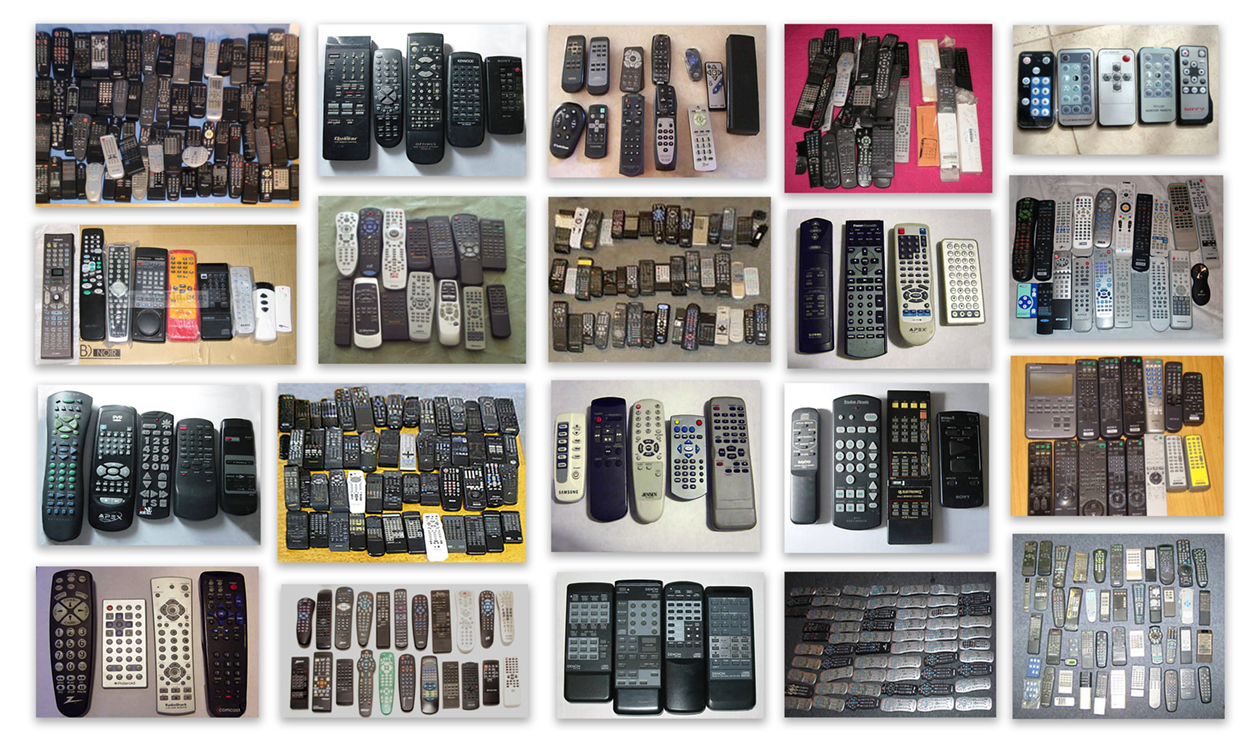
Photo by Penelope Umbrico

• Universal remotes aren’t inherently interesting, but I find New York photographer Penelope Umbrico’s collection oddly appealing anyway. [Penelope Umbrico]

• Do we gain anything by seeing crime scene photos? Public’s right to know vs. victims’ right to privacy. There are no easy answers. [CNN]

• Robert Caplin started The Photo Brigade to showcase and connect a vast network of photographers who blog and use social media. Caplin explains the submission process: “The best way to be chosen is to have a blog, as our mission is to encourage blogging. In your blog post we’d like to see a number of strong images with a well written explanation about the photography.” [Resolve/LiveBooks]

• Everyone’s taking photos of their food nowadays. “Evidently aware of the trend, manufacturers like Nikon, Olympus, Sony and Fuji have within the last two years released cameras with special ‘food’ or ‘cuisine’ modes.” [New York Times]

• What recession? Take photos for the City of New York  as a full-time staffer. The job is being filled for the first time since 1991 and it pays $37,519. [NY Daily News]
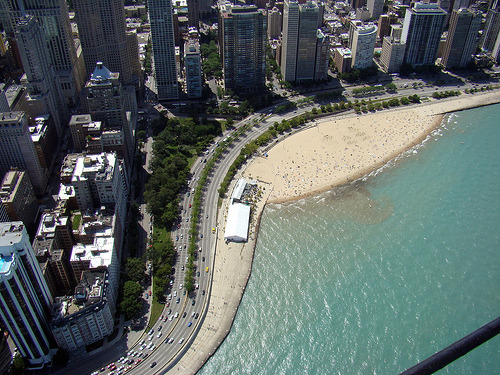
Chicago: Windy and Watched 24/7


Photo by RUNFAR

It’s always funny when people get upset about being photographed in public because they clearly don’t realize how much they already are being filmed. But I guess it’s preferable to be filmed by a vast network of surveillance and security cameras over a lone street photographer. Right? Right.

And if you’re in Chicago, you should know you are being filmed more than in any other city in the US. The city is plastered with cameras — likely over 10,000 of them — and the police use them to solve crimes from suicides to drug sales, and the people are just fine with it.

In less than a decade and with little opposition, the city has linked thousands of cameras — on street poles and skyscrapers, aboard buses and in train tunnels — in a network covering most of the city. Officials can watch video live at a sprawling emergency command center, police stations and even some squad cars.

What’s more, the ever-politic Mayor Richard Daley says he could install 10,000 more cameras and no one would say a thing. So, watch out.

(Funny thing is, these cameras never seem to videotape Chicago’s corrupt politicians or abusive police force breaking the law.)

Article from Chicago Tribune

Digital Has Done in the Pros

To piggyback on the New York Times article from last week (our post on it is here), the Guardian weighs in on the challenge professionals photographers are facing from the surge of amateurs in recent years. But instead of blaming Flickr, the writer of this piece feels it’s the point-and-shoot digital camera that’s made the most impact since it, he says, has “levelled the playing field.”

Incidentally, I always bristle at the mindset from digital enthusiasts that all these outmoded industries — music, movies, journalism, photography — just need to adapt to the changing landscape. There is a part of that assessment that’s true, sure. But the other part of it is, content providers need to be paid in order to produce high-quality work. When we expect that everything be free, fast and downloadable because, hey, that’s just modern times, get used to it — then quality will suffer. There’s just no way around that.

Article from the Guardian

Harassed Photographer Speaks Out

Newspaper editor/photographer Kai Eiselein wrote an excellent editorial in The Eagle & Boomerang addressing his experience with law enforcement at the Thomas S. Foley federal courthouse in Spokane last week.

Eiselein admits he was a skeptic before his own incident, thinking somehow photographers must be provoking authorities. But after his experience, he understands how photography has been demonized in a way that is unnecessary, unfair and scary.

My test at the Spokane courthouse proved without a doubt that what some other photographers were claiming was happening was true.

And he also addresses those commenters, those wonderfully strident, angry commenters, who automatically accuse the photographer in these situations:

The comments were the most interesting part of the post, a large number of people praised my actions, but an equally large number, also photographers, vehemently decried what I did. Many of them stated I should have just backed down and apologized for taking photos, others called my actions underhanded, a set up, and that no real journalist would do what I did.

And on the practices of law enforcement:

Done often enough, to enough people, it can become a de facto change in the law, all without any public input or open debate. It runs directly counter to the tenets upon which this country was founded.

And some final thoughts:

Do we ban the photographing of children, buildings, aircraft, trains, bridges or anything else that might be used for some nefarious purpose?

Do we slice large chunks from the 1st Amendment in the name of safety and security?

Have we become so afraid as a nation that we see danger in every corner and shadow?

The fact is, bad people will do bad things no matter what kind laws or security procedures are put in place.

Article from The Eagle & Boomerang

The iPad, Photography and You?


Photo by davidmnelson

People lined up at their local Apple outlets on Saturday for first dibs on the iPad. Personally, I’m unimpressed. Er … it’s smaller than an iMac but bigger than an iPhone! And not as utilitarian as either.

In any case, here are Twelve Things a Photographer Can Do With an iPad. It seems like most of the list can also be done on any smartphone, but no one looks to me for technological insights anyway.

Speaking of, check out AP photographer David Guttenfelder’s iPhone work from Afghanistan here

Article from Social Photo Talk

Diego Robles: Young & Award-Winning


Photo by Diego Robles

True/Slant has an interview with 25-year-old Diego Robles, the Denver Post’s most recent hire and the youngest photographer on staff. He also has a ton of awards already, including the White House News Photographers Association 2009 Student Photographer of the Year. Diego also won first place (for the above photo) for sports feature in the 2009 College Photographer of the Year contest. (The same contest that we posted on where outed Shield Law photographer Alex Welsh won first place.)

Robles has an interesting story, particularly that he was deployed in the army in Kosovo and that’s where he got hooked on photography after picking up a friend’s manual SLR. He was also a freelancer for the Gallup Independent focusing on the central and western part of the Navajo Nation before signing onto the Denver Post.

I want viewers to feel something when they look at my work. Anything will do. Photographs don’t always have to be intimate and meaningful.

Read the whole interview at True/Slant (via The Click)

Bullock Incites Paparazzi Frenzy

You don’t want to be Sandra Bullock right now.

Cool Photography Round-Up


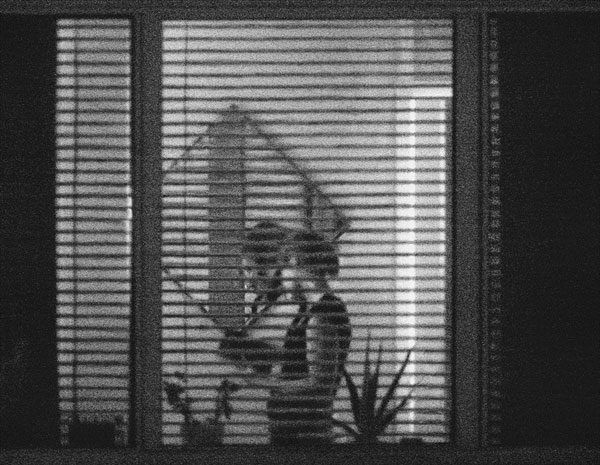
The girl with the horizontal blinds. Photo by Yasmine Chatila

• Yasmine Chatila’s project “Stolen Moments” is just that — the photos she’s taken by looking into New York City windows. “Part Hitchcock, part Shakespeare, part ephemeral postmodern visual poetry.” Also, part creepy. [Brain Pickings]

• Swiss photographer René Burri tells the story behind his now-iconic image of a cigar-smoking Che Guevara. “This picture is famous thanks to the chap with the cigar, not to me.”  [Guardian]

• A group of Dutch engineers and enthusiasts have hatched a plan to once again make Polaroid film. “The Impossible Project” (as its known) will create a million packs this year. [Wall Street Journal]

• Three-year-old Ruby Ellenby has a show of her photography at a gallery in San Francisco. Not to take anything away from Ruby, but just the idea reminds me of the excellent documentary My Kid Could Paint That. [San Francisco Chronicle]

Photography Profession Hurting

There’s a very sobering article in the New York Times today about the state of photography. In sum: Professional photographers are hurting. Forces have conspired to make it so there are less and less paying opportunities. Meanwhile, amateurs are getting those coveted assignments, accepting lower fees and devaluing the profession.

“There are very few professional photographers who, right now, are not hurting,” said Holly Stuart Hughes, editor of the magazine Photo District News.

So many sad facts in this piece. There are fewer outlets for photographers (428 magazines closed in 2009!). Due to budget constraints, stock photography is now more commonplace — meaning less original work, less creativity. Digital cameras have democratized the skill of taking photos. Anyone can do it.

But with “anyone” doing it, we lose the professional’s expertise. The ability to tell a story, an understanding of ethics and standards, long-term perspective and frame of reference. The same is true with journalism and writing. Some parts of this democratization is good, like new voices and viewpoints and people who never would have had the chance before are now heard.

But, ultimately what it comes down to is that this free content model of the internet is not sustainable. The New York Times, Washington Post, Los Angeles Times, et al. cannot produce as high quality content as they do and still give it away. I don’t know what our media landscape will look like in five or 10 years, but it’s safe to say that it will look very different from today. And we may be worse for it.

Article from New York Times

Spokane Courthouse – Level 4 Nonsense

ICE man

Photo by Kai Eiselein

On his Flickr page newspaper editor/photographer Kai Eiselein details his run-in with the authorities at the Thomas S. Foley Federal Courthouse in Spokane, Washington. As is typical in these situations, a lot of fuss was made out of a lot of nothing.

Three security guards, two federal cops from the Department of Hopeless Stupidity, lights and sirens, all for one lone photographer.

Eiselein was harassed by security and police and told he couldn’t take photos of the building or the guards’ faces. Then they ran his ID and tried to intimidate him with some nonsense about what he couldn’t do on this “level 4”-ranked federal property. Eiselein stood his ground, explaining he was “standing up for my rights, because if I don’t no one else will.”

It’s unfortunate when our federal authorities don’t respect or understand constitutional rights (or public vs. federal property). How can we expect them to defeat real terrorism threats when this basic information goes ignored?

Read Eiselein’s account and see the photos here.


Spam Blocked