Archive for the 'Photographers’ Rights' Category


ACLU Takes on DC Police in Photog Harassment Case


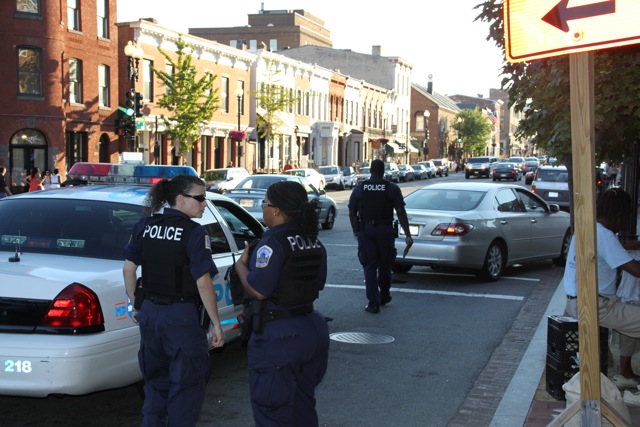
Photograph by Jerome Vorus

This past summer, photographer Jerome Vorus was harassed and detained by DC police when he tried to take photos of a traffic stop in Georgetown. The incident touched off a mini firestorm, with mainstream media outlets like the Washington Post and NBC crying foul. (It always helps when these things happen in a major media hub.) People were rightfully alarmed at the cops’ arrogance (telling him it was illegal to take photos of the police) and their violation of Vorus’ rights.

In a letter to DC Police Chief Cathy Lanier, a lawyer from ACLU’s DC chapter demands the police acknowledge the incident in the form of a settlement and an apology – or  a lawsuit will follow. If this doesn’t make police departments sit up and take notice, it should.

Times are changing, and it’s not fun and games and unlimited power anymore. The ACLU is very proactive on the photographers’ rights issue, and with photographer Antonio Musumeci’s recent settlement with the federal government, they have a pretty good track record of winning. Sometimes the only way you can change institutional behavior, or implement “corrective training” as the ACLU calls it, is with a costly lawsuit. Too bad it’s the taxpayers who will pay for these public servants’ ignorance.
New Haven Asst. Police Chief Arrests Man for iPhone Video

A fish rots from the head down. Especially in the New Haven (CT) police department. That’s where Assistant Chief Ariel Melendez ordered the arrest of Luis Luna for filming an altercation with his iPhone one early morning in September. Luna, 26, says police took his iPhone, erased the video he took of officers breaking up a fight outside a bar, and then charged him with interfering with police. He spent the night in jail.

Assistant Chief Melendez noticed Luna and approached him “in a very intimidating manner,” Luna recalled. He asked what Luna was doing.

“I said, ‘Filming,’” Luna recalled. “He grabbed my phone and walked away.”

Melendez ordered officer Kristen Fitzgerald to arrest Luna for interfering.

“I just could not believe it,” Luna said.

Apparently this isn’t the first time police in New Haven have been caught harassing and even confiscating camera phones in the recent past. But still, Police Chief Frank Limon claims that he knows filming police is not illegal.

Assistant Chief Melendez didn’t get the memo though, despite 31 years on the force. He doesn’t mind using jackbooted tactics to enforce nonexistent laws. Know why? Because he knows he’ll get away with it.

Source: New Haven Independent

“Suspicious Activity Reporting,” And We All Lose

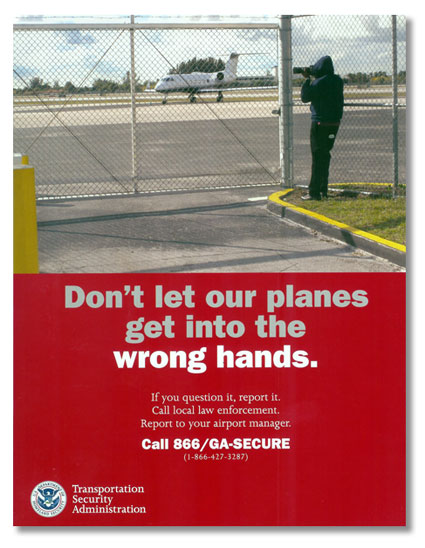
In an op-ed column today, the ACLU’s Michael German takes on “Suspicious Activity Reporting” (SAR) programs employed by the government in an effort to identify criminals and terrorists. The only problem? When the criteria of so-called suspicious activity is so broad as to include people taking photographs, jotting down notes, wearing hooded sweatshirts, etc., it essentially criminializes everyday, legal activities and makes all of our lives not just more uncomfortable, but less free. Moreover, as German notes, there is no evidence that “these programs have identified a single terrorist plot.”

A program that violates American values and fails to keep us safe is a lose-lose proposition. Law enforcement already has the authority it needs to fight crime and terrorism without sacrificing the rights of those it seeks to protect.

Incidentally, German is a former FBI special agent and intelligence expert.

Read the column here.

Miley Cyrus Needs to Shut Up and Eat Her Breakfast

Sorry Miley, but if you’re so concerned  about your 10-year-old sister being photographed then maybe you shouldn’t bring her out in public where there is no expectation of privacy and it is not against the law to videotape anyone. And if being photographed in public bothers you so much that it causes you to act like a self-righteous clam and put your hands on someone else’s property, then you should stay home and have your private chef cook you breakfast.

It was you, who was being rude…DUDE. Threatening to call the police because a woman was photographing you while in public? That’s a laugh. What would be the charge? More important, how can you even justify your behavior when your little sis’s picture is dreadfully already all over the place! Get over yourself.

This woman should’ve smacked you as soon as you touched her camera and told you to shut-the-fuck-up and go back to your overpriced fruit cup. But I love how you didn’t have enough bitch in you to do anything about all of the male paparazzi that were standing much closer to the restaurant photographing your annoying sister.

I’m presuming she’s annoying, since she shares your genes.

Shia LaBeouf Attacks Pap with Coffee, Then Runs Away

This video seems like a big joke, but it also makes me want to give up documentary photography and become a paparazzo. I already live in Los Angeles, and how great would it be to actually make great money taking pictures and then get to drop-kick Shia LaDouche’s ass after he throws coffee on you? Why don’t any of these paps ever kick the shit out of these celebrities going wild? Maybe Arnie should sign another law creating harsher penalties for celebrities who attack law-abiding photographers.

What a passive-aggressive pussy you are LaBeouf, running away like that.

Video of Ft. Hood Shooting Ordered Deleted

Photo from the Fort Hood Sentinel

Earlier Friday under cross examination, Pfc. Lance Aviles said he used his cell phone to record the rampage inside the processing center but was ordered by an officer to delete both videos later the same day. Aviles was not asked if he knew why the officer ordered the videos destroyed.

Here’s a question for supporters of photographers’ rights as well as military experts: Can an officer in the military legally order a subordinate to delete photos or video that the individual captured using his own cell phone?

For most of us, we all know that nobody can order us to delete our images or videos from our cameras. It’s absolutely illegal. Once the image is captured, it becomes our property and the destruction of that property is a criminal act. The law is very clear.

But what if the same scenario occurs within the confines of the military where a strong chain of command exists and any acts of insubordination are strictly forbidden and punished? Can a subordinate refuse a superior’s order to delete his photos or video without repercussions? And does a soldier have legal recourse if he is forced to destroy his own property?

What if the soldier follows orders, deletes the video, but then retrieves the footage using file recovery software? Is that insubordination? Since the officer was never ordered not to recover the footage?

What do you think?

Source: Yahoo! news

DC Police Seize Camera, Delete Photos

According to the video’s description, police seized the camera and deleted its contents, but the video was retrieved using file recovery software.

Here is a longer version of the video (which was also deleted by police) showing a heavily armed police force harassing a group of peaceful animal rights protesters.

Photography Link Roundup


Photo by “Mike” Michael L. Baird/flickr.bairdphotos.com

• AP photographer Julie Jacobson wins the top Military Reporters & Editors award for her photos of a marine’s death. Also: Chad Hunt wins for his Popular Mechanics photo essay of a military mission called Thunder 2. [MRE]

• Rock photographer Danny Clinch talks Bob Dylan, the Boss and Mary Ellen Mark in this interview on the T Magazine blog. [T Magazine/New York Times]

• Yemeni native and International Center of Photography student Amira Al Sharif has embarked on “Unveiling Misconceptions,” a one-year project to document the lives of American women in their 20s, and she’s raising funds here. [Boing Boing]

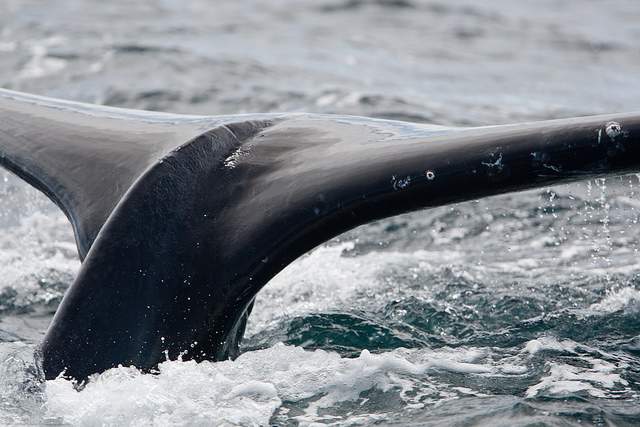
• Biologists identify a humpback whale on a 6,000 mile journey thanks to Flickr photos. [New York Times]

• Because embarrassment and shame shouldn’t be kept private — a web site devoted to those “not-so-hot photos” of your youth. [Before You Were Hot]

DHS Officer Bans Photographer From Public Protest in Los Angeles

Last week on October 5, I decided to head to downtown Los Angeles to photograph a rally that was being held at the federal building. What was dubbed as a National Day of Action against FBI Repression ended up being a major non-event, and only about 5-10 people were there to protest the FBI’s recent raids that targeted political activists in Illinois and Minnesota.

So for a photographer hoping to capture another protest with the usual high energy associated with these kinds of events, there really wasn’t much to photograph. Plus, it started raining fifteen minutes into this tiny protest, and that was still before anyone even arrived. However, at the same time the rain started falling, a Department of Homeland Security vehicle arrived, which caused me to believe that people were going to show up—at some point—and they did.

I stuck around and burned the roll’s last few frames on the lackluster protesters that finally arrived and used the very last frame for the Homeland Security decal that was on the front fender of the DHS SUV. It seemed like an important stock image to get, seeing that DHS has been known to harass a photographer or two. I thought I could use my photo for future posts dealing with DHS harassment rather than pulling the DHS decal from the web.

Well, I should’ve known that I would be posting a video showing a DHS officer prohibiting me from returning to a protest that was being held on a public sidewalk before I even processed the roll of film I shot that day.

Photography Link Roundup

Photo by Flip Schulke/U.S. National Archives

• Stephen McLaren and Sophie Howarth talk to the BBC.com photo editor about their new book, Street Photography Now: “What keeps me doing this is a belief that one of photography’s core purposes is to discover poetic moments in everyday life,” says McLaren. [BBC]

• Remember how those oil-soaked animals really galvanized public outrage during the BP oil spill? Photographer Joel Sartore’s striking images will appear in the October issue of National Geographic. [NPR.com]

• Brian Ach, a “top stringer at Wireimage’s NYC office,” gives the lowdown on being a wire service photographer. Among his revelations: It’s hard, the pay stinks, it’s fascinating.  [JPG]

• “panoptICONS” is a  creepy comment on a world living under constant surveillance. To do this, two Dutch artists placed birds with cameras for heads throughout the city. [Wooster Collective]

• Photographer says Bret Michaels’ abs are real, not Photoshopped, on the cover of Billboard. [Billboard]


Spam Blocked