Archive Page 86

Dude Carries a Camera


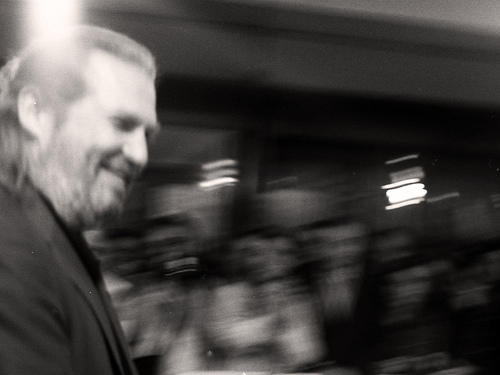
Photo by lg_fotografia

So Jeff Bridges won the Academy Award for Best Actor Sunday night. I was kinda unimpressed by his performance in Crazy Heart, but I understand the Oscar is often for your cumulative career or extreme likeability. (Sandy Bullock, I’m looking at you too.)

In any event, Bridges is apparently quite the shutterbug. As PopPhoto found out a few years back, Bridges favors panoramic style, uses a Widelux and shoots mostly on his movie sets. His work was compiled in the 2003 book Pictures.

See more of Bridges’ work on his personal site here.

Article via PopPhoto Flash

Ordinary People

Photo by discarted

If you’re a regular reader of this site, or even someone new to photography, you’re likely already well aware of flickr—Yahoo’s user generated photography site where thousands of people upload their photos on a daily basis and join various groups to share their work, as well as discuss everything related to photography, including our favorite topic—photographers’ rights.

One of these groups is called Humanistic, which was created “In the spirit of William Eugene Smith (1918-1978),” and is dedicated to sharing photography that “…is humanistically driven, with a strong, genuine human-interest theme.

Humanistic was established in May of 2009 and the group administrator, tsienni, is celebrating the group’s steady growth by holding their first contest dedicated to Ordinary People.

The contest is limited to one submission per group member, and the rules are that the image must contain at least two people and not be altered in any way, or excessively processed—which, some would argue is rather arbitrary and nondescript. However, anyone familiar with William Eugene Smith’s work would instinctively know what the contest organizer meant by “excessively processed.” More important though, the first place winner will received $500 worth of Kodachrome.

Kidding. The contest is for fun.

And Kodachrome will be joining the dinosaurs very soon.

The submission deadline is March 10th, so if you  have a photo that you think is worth sharing with others and representative of Smith’s work, be sure to join the group and submit your image by this Wednesday.

Join Humanistic.

When the News Becomes the News

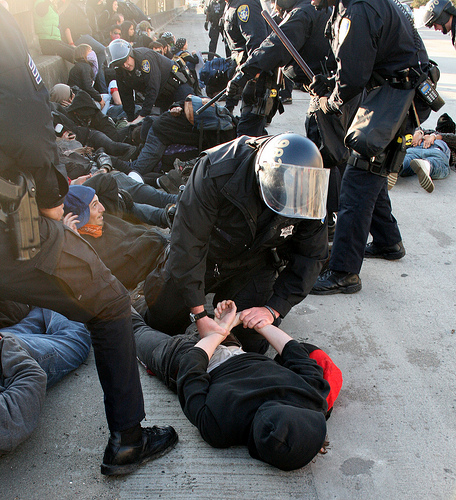
UC Berkeley Photojournalist Lands In Jail


Photo by Reginald James/TheBlackHour.com

If you’ve been following the woeful state of California’s public university system, you know there’s been some major protests about budget cuts that are decimating the schools’ previously stellar reputation.

Last Thursday, on March 4, thousands of demonstrators gathered at Oakland City Hall in support of public education funding. When a group splintered off for a march across Interstate 980/880, Cameron Burns, 18, a freshman at Berkeley, followed them with his Flip camera as a reporter for The Daily Californian.  

Burns found himself in the middle of a chaotic scene when riot police advanced on the protestors. He was tackled and handcuffed as one of 150 people arrested by Oakland police. He was charged with “obstructing a public place and unlawful assembly” and spent 20 hours in jail. Burns says he repeatedly told police he was a journalist, but he couldn’t prove it because he didn’t have his press pass.

Daily Californian staff, university officials and a state senator are working to get the charges dropped since Burns was working as a journalist during the melee. Still, he says he has “no regrets.”

Here’s Burns’ video of his experience at the protest. It’s too bad he didn’t get any video of the actual arrest because it would have made his piece.

Article via The Daily Californian

Jamaica – Minus Tourists, Rum Punch

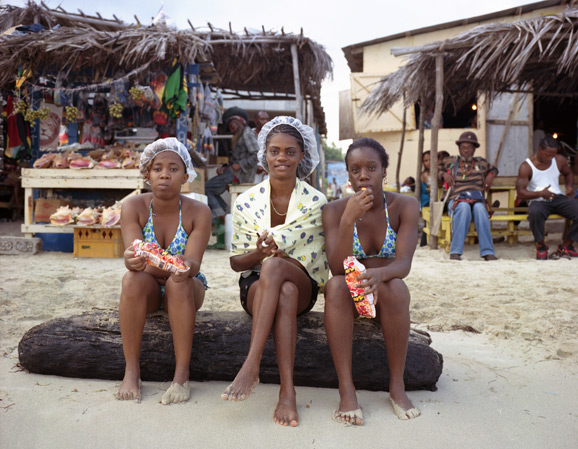
Photo by Caroll Taveras

GOOD magazine’s Picture Show blog features Brooklyn-based photographer Caroll Taveras, who traveled to Kingston, Jamaica, on assignments for both the Guardian and Culture + Travel. Taveras says on all her jobs she tries to do something for herself – outside of the assignment, and so these pictures capture the locals as they live.

On a side note, Taveras runs Photo Studio, a nonprofit devoted to documenting communities around the world. In January and February she launched a $5 portrait project where she offered a 4.5″ Polaroid photo for $5, with the option of upgrading to an 8×10 for $20. She plans to bring it to Berlin this spring. See some of the portraits here.

Read and see more at Picture Show.

Flags, Disasters and Wire Photographers


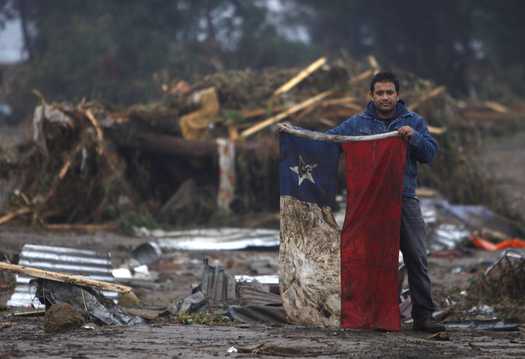
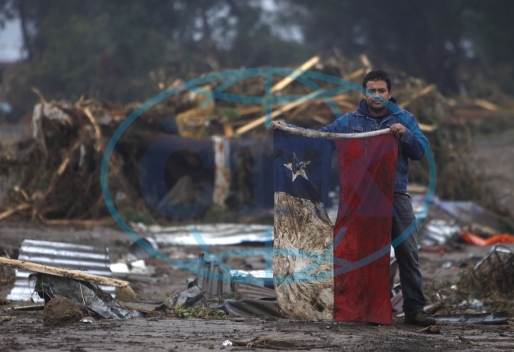
Photo by Roberto Candia/AP

This image, taken by Roberto Candia for the AP, has been published around the world and is said to have sparked great nationalism in Chile in the aftermath of the 8.8 earthquake last month.

ABC News reports that the subject, Bruno Sandoval, returned to the spot where his home once stood in Pelluhue to look for his belongings. He found the tattered flag among the ruins, and amazingly, an AP photographer was there to capture it. Talk about timing.

Isn’t it interesting that pictures of people raising flags become so iconic after disasters, like the firefighters on 9/11 and the marines at Iwo Jima. Of course, it makes perfect sense — it’s all about symbolism and hope, which people are in desperate need of after a tragedy. Iconic images can never be planned, unless they are, in fact, planned. I guess that’s what makes photography serendipitous in a sense.

Article via ABC News

Shield Law Photographer Outs Himself


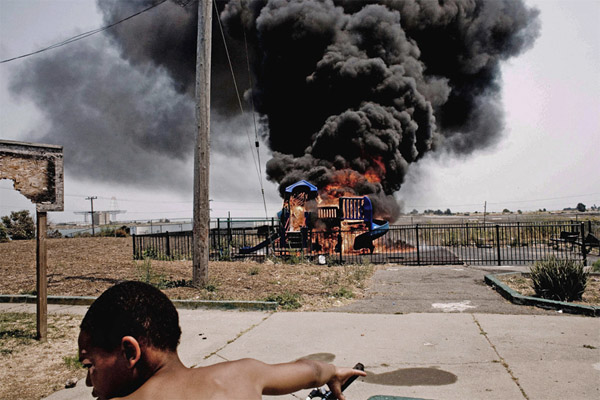
Hunters Point, San Francisco 2008 Photo by Alex Welsh

A former San Francisco State student whose photo of a dead man thrust him into the middle of a shield law controversy has outed himself – by winning a national photojournalism contest.

SF Weekly reports that Alex Welsh, 23, won first place in the 2009 College Photographer of the Year awards in the documentary category. In 2008 Welsh was photographing Hunters Point, the last predominantly black neighborhood in San Francisco, when a dice game turned deadly for one of his subjects, Norris Bennett. That photo, of Bennett’s bloodied body being attended to by a police officer, is included in the series, along with every major theme of poverty-stricken neighborhoods: a funeral, fire, tattoos, dog fighting. But they’re gritty and real and deserving of the award nonetheless.

The police tried to get a search warrant for the photos, which Welsh successfully fought using the shield law. Shield laws protect journalists from having to testify or disclose sensitive information to law enforcement. Welsh’s name was redacted from all court documents and not released by police or journalists during the controversy so he was able to remain anonymous. Welsh was apparently worried for his safety, but no longer. I guess it helps that he lives in Brooklyn now.   

Interestingly, seeing the photos in the contest, the San Francisco police detectives have renewed their interest in pursuing Welsh to get him to cooperate. He probably doesn’t have much to worry about though.

See Welsh’s winning photos series, Hunters Point – “We Out Here,” here.

Article via SF Weekly

Nine Meters in English is…?


For anyone who remembers how ridiculous CNN firebrand Rick Sanchez acted a few months back in the aftermath of Shawn’s harassment by the LA Sheriffs, this Daily Show segment is too funny. Sanchez is hyped up, caustic and really, really ignorant.

Just another day at the office.

Watch it here at The Daily Show.

“In This Day and Age” Cops Stop Photographers


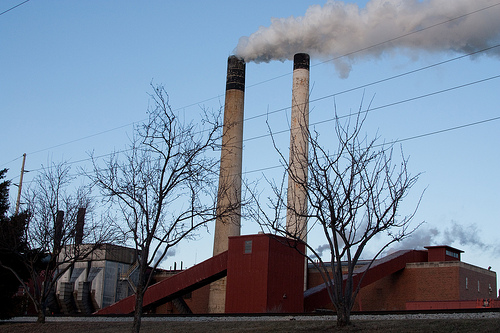
Photo by Jason C. Romero

This is a familiar story. Maybe you’ve heard it? A guy appreciates some artistically interesting yet vaguely industrial part of the landscape. Usually the light is really good. He gets out to take some photos. A cop shows up and starts asking questions. He makes allusions to terrorism while he harasses him for conducting a perfectly legal activity in public using that old bromide “in this day and age.”

Only this time, the Champaign, Illinois, photographer, Jason Romero, made the mistake of putting his hands in his pocket too many times and got frisked. They didn’t like his iPhone that was set to record audio. They told him that was illegal. And then the cop went through the things in his pockets, including notes and notebooks. A couple more cops showed up and they gave their own requisite “in this day and age” speech. 

Not: “In this day and age, police officers like to stop innocent photographers because we’re confused and scared about terrorism but don’t really know the law or how to address it in our town.”

No, not that one.

Article via Jason C. Romero Blog

Bike Cops Arrest Photog at Nightclub Scene


Photo by Jessica Kourkounis/City Paper

Jauhien Sasnou, a freelance photographer in Philadelphia, was arrested last November for taking photos of a melee that took place outside of a nightclub. He was found guilty, fined $148 and ordered to do 24 hours of community service. The Philadelphia City Paper reports this week on Sasnou’s arrest and the ongoing problem photographers face when shooting scenes that involve law enforcement.

Sasnou says that, on the night in question, a group of concertgoers ignored police requests to disperse and shoving and pepper spray ensued. The whole incident took three minutes and three people were arrested – but not before Sasnou took out his camera to document what he describes as excessive force by the police. That’s when an officer noticed him and he was arrested. Sasnou was not informed what his crime was. (The police report says Sasnou “remained on location and began to take pictures” after he was told to leave.)

From the article:

Civil rights lawyers say that Sasnou’s experience isn’t uncommon. Although there doesn’t seem to be any hard data available, anecdotal evidence suggests that citizens who document police activity with cameras are frequently arrested.

In regards to photographing police officers, Pennsylvania apparently has a murky law that revolves around technicalities and the difference between “not prohibited” and “legally allowed.” Nevertheless, the Philadelphia police spokesman said photographing police activity is not something you should be arrested for.

And, finally, the writer makes this point, which is one we’ve long held on this blog:   

It is, perhaps, ironic in an age when, across the country, police cameras capture and ticket red-light-runners, and many traffic stops are videotaped from the dashboard of a squad car. “Well, all of a sudden when the shoe is on the other foot, it’s, ‘Wait, wait, there’s an intrusion of the wiretap act,'” says Paul Hetznecker, a Philadelphia civil rights lawyer.

Article via the City Paper

Spam Blocked