Archive for the 'Photojournalism' Category


Judge Rules In Favor of Photog

Hey, guess what? It turns out the police are not allowed to seize a photojournalist’s camera, which we all knew but, still, sometimes these things have to go to a higher court so we can double-check. On Friday, a judge ruled that a search warrant used to review David Morse’s photos from a December 2009 UC Berkeley protest was invalid.

While covering the protest for IndyBay, Morse was arrested, along with seven others, and charged with assaulting a police officer and vandalism among other things. A few days later, all the charges were dropped and Morse’s camera was returned, but his storage devices never were. The university was also ordered to return all of Morse’s photos on Friday.

From the San Francisco Chronicle:

Morse was covering the demonstration outside Chancellor Robert Birgeneau’s campus residence for the San Francisco Bay Area Independent Media Center, also known as Indybay. Morse repeatedly identified himself as a journalist before he was arrested by campus police, which obtained a search warrant to look at his photos before he was released on bail, according to the First Amendment Project.

Score one for the constitution (and the First Amendment Project).

Article from San Francisco Chronicle and IndyBay

Reporter Attacked at Neighborhood Meeting

What was so important at the “members only” La Habra Heights Improvement Association meeting that the members had to get into a physical altercation with a photojournalist? La Habra resident and independent reporter George Edwards was filming the yearly meeting when LHH member John Pearce lost it and attacked him from behind, trying to take his camera away.

After a group surrounded Edwards and repeatedly asked him to leave, saying it was a private meeting, another member, identified as Jeffrey Heintz, manhandles Edwards while claiming Edwards’ “was attacking members of the Improvement Association” with his filming. As Edwards tries to defend himself, a woman named Karen Vipperman says, “No, you were not attacked, your camera was touched.” (Note to Karen: Look up what assault means.)

Now, clearly there’s history and bad blood among Edwards and these people, and that’s totally immaterial. Because you take that out of the equation, and these LHH people are bat f*%#ing crazy. Just ugly, ugly behavior from adults who are supposed to be representing their community.  Meanwhile they don’t even realize another person is filming the whole thing.

Edwards filed a report with the LA sheriff’s office, which is investigating the incident.

Article from lahabraheights.net (TOTH to J.Alcorn)

Reuters Accused of Anti-Israel Propaganda


Photos by Reuters

Is Reuters showing its anti-Israel bias? Or is the mini furor over some cropped photos the result of over-reaction and paranoia? As you can see above, the photo on the left shows an Israeli soldier surrounded by Turkish pro-Palestinian activists aboard a Gaza-bound ship. In the image on the right you can see the knife in the activist’s hand — a much more ominous scene. The photographer was later identified as Turkish journalist Adem Ozkose.

The blog Little Green Footballs exposed the omitted knife, and Reuters quickly addressed the issue, saying the image was cropped at the edges, as is the usual practice, and the knife was “inadvertently” removed. LGF says it’s not the first time “Reuters has been caught altering photos for propaganda purposes,” citing a 2006 photo of doctored smoke in a photo from Beirut. Meanwhile, Yahoo published the photo unaltered.

It’s no wonder there will never be peace in the Middle East.

Article from Little Green Footballs

Obama Misses Mark on Spill Story


A bottom-dwelling eel found dead on the surface of the BP oil slick. Eels are normally never found on the surface unless pulled up from the bottom by shrimping trawlers. Photo by NWFblogs

Sometimes presidents just don’t get it, do they? When President Obama visited the beleaguered Gulf Coast last week, he made the requisite speech about hearing the constituents’ concerns. “The cameras at some point may leave; the media may get tired of the story; but we will not,” he said.

But as The New York Times Media Decoder blog pointed out, this was a puzzling assessment but also typical administration boilerplate. In fact, the media has been there for six weeks now. They’ve actually even been prevented from covering the biggest environmental disaster in US history by BP and government officials who have seemingly been working against them.

And it really resonates when someone as prominent as NBC Nightly News anchor Brian Williams speaks out about it, too. As he told the NYT: 

“I think the phrase about the cameras leaving is just something that presidential speech writers keep on an F8 key, the kind of stuff they just say, but in this case, it was really off the mark,” he said. “We have all been all over this story and I haven’t seen any sign that we will packing up the cameras any time soon.”

The piece says the story is over-covered if anything. And the public’s interest isn’t waning, according to a Pew Research poll that found 55% of Americans are following the spill “very closely.”

Article from New York  Times

More Sad Spill Images

If BP et al. wondered if there was any way the gargantuan oil spill could get worse, the latest crop of photos of beleaguered birds covered in oil and fighting for their lives prove it can.

AP photographer Charles Reidel took some truly disturbing photos of dead and dying pelicans around Grand Terre Isle, LA., which you can see on Newsweek.com. Oil has been gushing for 46 days now and there isn’t really an end in sight. BP CEO Tony Hayward said he just wants his life back, but we think these birds would like theirs too.

LAPD Unlawfully Detains Photographer

The above video was recorded on February 21, 2010 in Hollywood, CA. As you will see from the footage, the officer’s behavior is deeply disturbing and should cause alarm within the Los Angeles Police Department.

And despite what the officer claims in the video, it is completely legal to photograph and videotape anybody, including police officers, when an expectation of privacy does not exist. It is the public’s right to photograph and record police activity that occurs on our streets and in our neighborhoods, and we should not be subjected to verbal assaults, illegal detainment, or threatened with an unlawful arrest if we choose to do so.

This encounter could have been a non-issue.

To voice your concerns regarding this officer’s behavior, contact the following individuals and offices:

Internal Affairs – Los Angeles Police Department
304 South Broadway, Suite 215
Los Angeles, CA 90013
Office: 213-485-1486
Fax: 213-473-6420

Antonio Villaraigosa, Mayor of Los Angeles
Email: mayor@lacity.org

Eric Garcetti, City Council President
5500 Hollywood Blvd., 4th Floor
Hollywood, CA 90028
Phone: 323-957-4500
Email: councilmember.garcetti@lacity.org

Tom LaBonge, Councilmember, District 4
Hollywood Field Office
6501 Fountain Ave.
Los Angeles, CA 90028
Phone: (323) 957-6415
Email: councilmember.labonge@lacity.org

Photojournalism’s Online Options

True, in this fast-changing digitally-oriented world, there might not be a lot of print outlets left that showcase great photography, but there are quite a few great online sites.

Photographer Michael Coyne posted recently on the Black Star Rising blog that, in terms of photojournalism today, “the story is not only one of doom and gloom.” He thinks there are plenty of opportunities out there, and he says he likes being able to travel through the world via the internet. Here are his favorites:

VII The Magazine
The Digital Journalist
RVM
Life
SocialDocumentary.net
Time
The 37th Frame
Positive Magazine

Article from Black Star Rising

Photos From the Front Line

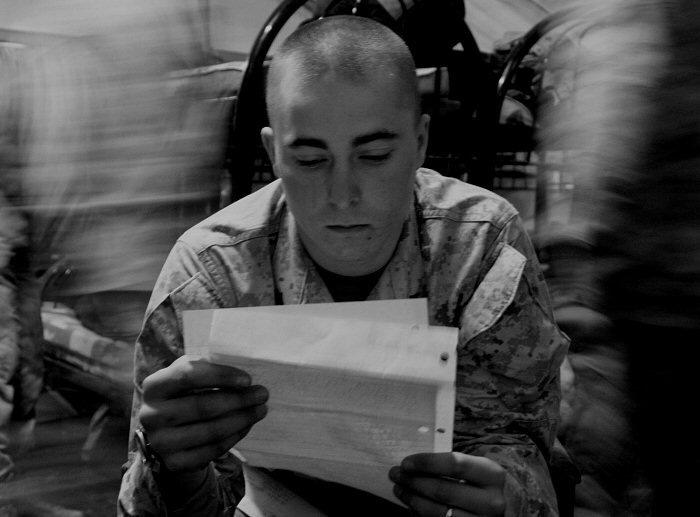
Photo by Reynaldo Leal

Marine Reynaldo Leal served in Iraq for two tours. He says he was never without three things: his rifle, his combat helmet and his Canon 20D. The interesting thing about modern war, he notes, is that all the soldiers have a camera now. So while the restrictions imposed by the military means we might not be getting the iconic images of Vietnam, we get a different view from the people actually fighting on the front lines.

CNN.com did a mini documentary on Leal and his camera here, and he gives some insight into photographing war.

You can see more of Leal’s work here.

Photographer Roughed Up in iPad Fray

Alan Pryke, a news photographer with The Australian newspaper, arrived at Sydney’s flagship Apple store today to document the much-anticipated launch of the iPad. But when the Apple crew showed up, they set up front and center, ignoring the protocol that the first media outlets there are the ones that get the best position. Pryke protested and tried to reclaim his spot, when security intervened and grabbed him by the shirt and shoved him. The situation was soon resolved, and the security firm apologized later for the incident.

Pryke plans to write a letter to a letter to Apple, which I’m sure will go straight to the top and be addressed immediately.

Article from The Australian

BP’s Photo Clampdown

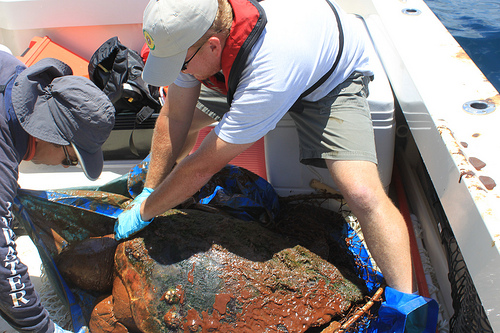
Rescued sea turtle. Photo by Louisiana Department of Wildlife and Fisheries

It’s official: The BP oil spill is now bigger than that other catastrophic disaster, 1989’s Exxon Valdez, and the worst in US history. And as you might expect in the nefarious, super-connected, high stakes world of Big Oil, there are a lot of people who don’t want the full calamity of that known and reported on.

So local and federal officials, under orders from BP no doubt, are trying to restrict where photojournalists can go. We posted on this earlier in the week, when a CBS News crew encountered some Coast Guard officers and BP contractors who threatened them with arrest if they didn’t leave the oil-covered shoreline.

Not surprisingly, it wasn’t a one-time occurence. A Mother Jones’ reporter wrote about his own account of coming up against local officials while trying to survey the scene at Elmer’s Island Wildlife Refuge (he was told BP’s in charge because “it’s BP’s oil”).  And in a Newsweek piece that runs down the restrictions on press coverage,  they mention a Times-Picayune photojournalist whose flyover of the affected areas was canceled once BP officials got wind of it.

“It’s a running joke among the journalists covering the story that the words ‘Coast Guard’ affixed to any vehicle, vessel, or plane should be prefixed with ‘BP,’ ” says Charlie Varley, a Louisiana-based photographer. “It would be funny if it were not so serious.”

Unfortunately BP’s efforts are futile. There is no damage control in a situation that’s already bad beyond belief. They would do more to burnish their image by appearing to be willing and accommodating with every effort that’s being made to cover and control the spill.

Article from Newsweek


Spam Blocked