Archive Page 93

Town Halls, From the Photographer’s Perspective

Political discourse has turned ugly in America, and it’s more of the same with the current health care debate. Rather than accepting our system is broken and championing change in any form, certain people like to cling to destructive myths and wild misinformation to fuel their own anger and sense of oppression. At least that’s my take. 

The Columbia Journalism Review has an interesting interview with New York Times photographer Damon Winter, who won the Pulitzer this year for his work covering the then-Senator Obama’s campaign for the presidency.

Winter took this photo of an angry man at a town hall meeting this week in Lebanon, Pennsylvania, and he talks about his role at events like this – among other things, avoiding creating caricatures and staying calm among the fray.

Article via Columbia Journalism Review

Time Pays $30 for Cover Image

1101090427_400

For Time magazine’s April 27th issue they used a photo of coins in a jar from iStockphoto. And they paid $30 for it. If they had commissioned such a photo they would have paid thousands of dollars. 

In this article, Salon highlights the back-and-forth on the Photography Talk forum, which included the photographer himself, Robert Lam. While Lam was thrilled about the exposure, predictably, people were pissed (as they always are on any forum anywhere). Commenters charged Lam with everything from aiding and abetting a corporate behemoth in taking advantage of the little guy to devaluing photography in general.

The cold, hard, sad reality is that magazines and newspapers are being squeezed – to such a point that most of them won’t be around in 10 or so years. So they’re cutting corners, using stock photos, and what does that mean for photographers? Even less opportunities to work.

This recession has exacerbated the fact that editorial work is shrinking. For anyone who produces content, they will find themselves (if they haven’t already) with less and less options. 

If I were Lam, I would just wish I’d gotten my name on the thing, not iStockphoto.

Article from Salon

No Photos of Michelle Obama

When First Lady Michelle Obama and her daughters went to lunch last week at a DC restaurant, her secret service guards first confiscated all the patrons’ cell phones so they couldn’t take pictures.

This doesn’t seem right. Is that normal protocol for our president and his family? And is this a security or vanity concern? Either way, it doesn’t seem to have merit and reflects badly on the first family.

Article from the Page Six/New York Post

No Photography Aimed at PATH Stations

I’ve had my own run-in with the ridiculously self-important New Jersey PATH security, and today the War on Photography blog posts a video shot by man aiming his camera at PATH trains while not technically on PATH property – he was shooting from Newark’s Amtrak station. Even still, he was stopped by a janitor, then security. 

It’s horribly wrong – not to mention illegal if you really want to put a fine point on it – that this public place, a government entity, funded with taxpayer dollars, has decided to enforce a no photography policy. Unfortunately, as one of our earlier commenters pointed out, it’ll take a major lawsuit for the Neanderthals that run the transit agency to see the error of their ways. 

Article from War on Photography

Joe Wigfall on the Streets


“Any time you have people and they’re alive, you’re gonna have something going on.” – Joe Wigfall

Check out this clip of New York City street photographer Joe Wigfall. He’s the winner of WNYC’s Street Shots Challenge. Good stuff. 

See Joe Wigfall’s Flickr stream here.

SF Muni to Halt Harassment Very Soon

It seems the San Francisco Muni, the city’s transportation agency, is finally being forced to publicize its policy regarding photography. After several incidents where passengers have been harassed by drivers and fare inspectors, including this disturbing one involving a  high school student (yes, the inspector actually says the Muni is private property), SF Appeal asked an MTA spokesperson for answers. The spokesperson said a policy is forthcoming (“soon”), while allowing that it will say non-commercial photography is allowed as long as it doesn’t disturb transit. 

Muni inspectors in the meantime are being re-trained on how to deal (or not deal, as the case may be) with photographers. Rather smartly, the Appeal asked the spokesperson what one should do if they are harassed by a Muni staffer.  

His answer: “Ask to speak to their supervisor. If that doesn’t work, call 311 and file a complaint with all the details.”

Article from SF Appeal via Streetsblog San Francisco

Famed Photographer Facing Financial Ruin

Annie+Leibovitz+Photographer+Life+Press+Conference+rkE0S6pNJFal
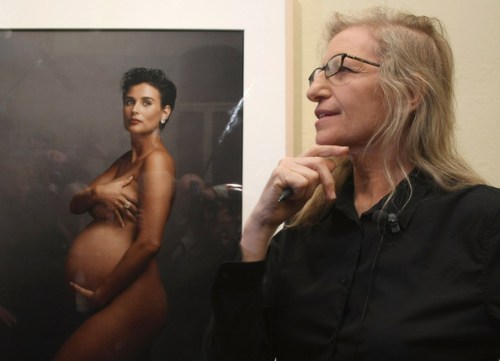
Photo by Sean Gallup/Getty Images Europe

Annie Leibovitz is one of, if not the, preeminent celebrity photographer in the world. She also owes $24 million – due September 8th – and she’s on the verge of financial ruin, not to mention losing the rights to her archives.

So the New York Times in a recent article asks rather incredulously: “If Annie Leibovitz can’t make it in New York, who can?” Er, anyone can make it in New York – especially at the salary she’s been commanding for around 30 years; she just must be, to be really frank, a colossal flake.

While the article seems sympathetic to Leibovitz, any thinking person would come away shaking their head. It describes Leibovitz as beholden to a “pawn shop”-like lending company (but their shaky reputation was apparently well-documented) and having  family burdens (like work overload and children – yes, very unique) and real estate expenses (multiple million-dollar homes). They also say she’s  terrible with her money and extremely irresponsible and always has been.

“The mind that can take these extraordinary pictures is not necessarily the same mind that is a perfect money manager,” said Graydon Carter, the editor of Vanity Fair.

OK, but does that mind know well enough to pay someone else to manage their money? How does anyone making the money she does, or even just anyone anywhere,  get into a situation where they owe $24 million? The article notes that she’s always been extremely protective about reproduction of her work, and sadly, she stands to lose the rights to all of her images since she pledged them as collateral for the loan (along with her homes). Too bad she wasn’t protective of her financial portfolio.

Like MC Hammer and Ed McMahon before her, it’s just really hard to feel sorry for multi-millionaires who can’t manage their money.

Article from The New York Times

“Sign of the Times” – Bleak In Yorkshire

It almost seems redundant to keep posting these incidents from England because they’re so egregious and, sadly, seem to be just the way of life there nowadays. But it’s also possible, with regular attention and outrage, that things could improve and the stranglehold authorities have on photography might lessen one day.

In a story on the Yorkshire Post site Tuesday, Carl Minns, a member of the Hull City Council, was contacted by police after he took pictures at a local mall. Minns was taking photos at St. Stephen’s shopping center when a security guard told him he wasn’t allowed because it was private property. But here’s where it gets ridiculous: When Minns complained, in the form of an email to the center’s management, instead of replying they forwarded it straight onto the police! As if a city council member expressing concern about a photography policy was a threat!

Minns soon got a call from the police, which he said was handled all well and good on their end, but acknowledged it was an unusual scenario: “I have a lot of dealings with the police because of my job, but I can imagine the shock of this happening to an ordinary person.” The police told him the center was supposedly acting within the country’s terrorism guidelines.

In the meantime, Minns was told he won’t be facing any charges, but he still hasn’t received a response to his initial complaint. A center spokesperson called it an oversight they’re working on, while admitting the photography policy was a “sign of the times.”

Article from the Yorkshire Post

Homeland Security Renews Photography Suspicion

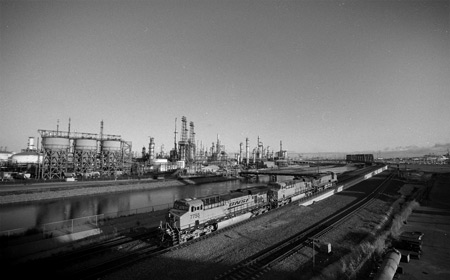
0382A012Critical infrastructure. Photo by discarted

Homeland Security head Janet Napolitano told reporters last week that we all need to be aware and on the lookout for terrorists on the prowl, and that means calling in photographers “continually taking photographs of a piece of critical infrastructure that doesn’t seem to make any sense.” Jeesh, way to set us back, oh, about eight years, Janet. I feel like I’m having flashbacks to a different administration.

Just when it looked like there was a little progress, with Amtrak and the NYPD revising or clarifying their policies – now, law enforcement has a renewed mandate to harass photographers who “continually” shoot, say, their local ports or skyscrapers. I can just see the cop or security guard who finds that type of photography just “doesn’t make sense.”

Article from PDNPulse

Read the National Press Photographers Association response here

Photography Police Issue Goes to High Court

2583984586_5783c40aa6
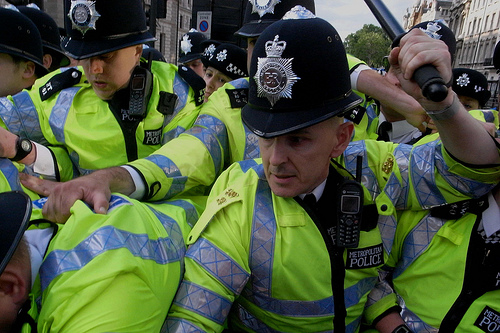
Photo by danger joel

A woman in England is finally taking on the Met police for their harassment of people who film and photograph them. Gemma Atkinson is pursuing a High Court review (equivalent to our Supreme Court in the US) over the police practice of using the Anti-Terrorism law to basically criminalize all photography.

In March,  Atkinson was filming her boyfriend being detained in a London subway station as part of a drug search when she was approached by a plainclothes officer who told her what she was doing was illegal. (“Do you realise it is an offence under the Terrorism Act to film police officers?” he said.) When she refused to hand over her cell phone – having already slipped it into her shirt pocket – the officer was relentless in trying to get it from her, ultimately calling over two female officers for help. A struggle ensued for the next 25 minutes where she was physically overpowered, handcuffed and threatened with arrest.

Finally, when the officers called the station (presumably to speak with a supervisor who told them they had no cause), they let Atkinson go – no apology, no explanation, nothing. The original officer’s only rationale during the incident was that he didn’t want the video to be all over the internet, i.e., YouTube.

Interestingly, the premise of this case is at odds with the report that police in Manchester have filmed over 900 suspects and their associates, whether they’ve committed a crime or not, all in the interest of building a database for tracking criminals and maybe-someday-future criminals. Police at times have openly followed these suspects down the street with a handheld camera. Suspects are then sent a letter informing them that the footage could appear on YouTube. Oh, the hypocrisies!

Read the article about the Gemma Atkinson incident and an interview with Gemma  at The Guardian site.

Read the BBC report about the Manchester Police here.

Thanks to pixel.eight.


Spam Blocked