Archive Page 71

It’s Our Right to Videotape Police, Says ‘Time’


Screen grab: YouTube

Time magazine gets in on the photographers’ rights debate with an essay by lawyer Adam Cohen in this week’s issue that asks, ” Should Videotaping the Police Really Be a Crime?” (I believe the answer is “Hells no,” but I think this is a rhetorical question.)

…the police can do a lot of damage just by threatening to arrest and prosecute people. “We see a fair amount of intimidation — police saying, ‘You can’t do that. It’s illegal,'” says Christopher Calabrese, a lawyer with the ACLU’s Washington office. It discourages people from filming, he says, even when they have the right to film.

And the money shot, the irrefutable argument, as Cohen writes, is: “If the police are doing their jobs properly, they should have nothing to worry about.”

Read the whole article on Time.com

Photojournalism Dead…Officially?

Photo agency director Neil Burgess knows how to kick a horse when it’s down. In an essay on the Editorial Photographers UK site, he writes on a grim topic – the end of photojournalism. In his 25-year career he’s watched the evolution of photography, from blossom to bust. And now, he sees “no photojournalism being produced.” Sure, there are still photos being taken to accompany stories, portraits commissioned, that sort of thing, but he claims media outlets “no longer fund photojournalism. They no longer fund photo-reportage. They only fund photo illustration.”

As everyone knows, media outlets just don’t have the money to fund serious, substantive photojournalism — they barely have money to fund the newsprint anymore. With the rise of citizen journalism and the democratization of cameras, there’ll be plenty of photos, to be sure. But, as Burgess says, “what about the guys who produce stories, who cover issues rather than events?”

It’s a digital world, we’re just living in it.

Read the whole essay on EPUK.org

Who is YouTube Member “8Bwv”?

“Yeah go fuck yourself  man. Your a low life scum bag. I would love to meet you  so I could stab you in your fuckin neck. You whinny pussy piece of shit.”

Over the past two years or so, we have received plenty of disparaging comments from various people on YouTube, but this one from “8Bwv” (which was left July 30, 2010) is probably one of the angriest and most threatening comments that we have had the pleasure of reading.

If anybody knows who YouTube member “8Bwv” is, please let us know.

Armed But Not Dangerous


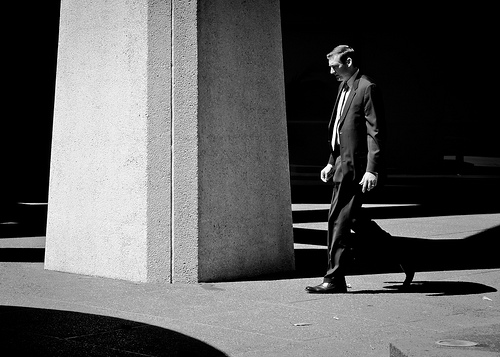
Photo by Justin.Beck

Wouldn’t it be a shame if pictures like this weren’t possible because of ignorant security guards? The photographer of this shot at the Transamerica Building in San Francisco was harassed by a guard who was “concerned” by his presence — on the public sidewalk — and made a point of bringing a camera out to take photos of him. (The subject of the photo is another member of the security staff.)

In a recent post, the New America Foundation’s Media Policy Initiative blog cautions about the dangers of letting fear and security concerns, however real or imagined, overshadow First Amendment protections.

But in the modern information society, the camera is not a weapon; on the contrary, it’s increasingly the main tool of citizen journalists in their effort to spread information. The easiest way that an average person can contribute to the news ecosystem—one of the prime opportunities for civic engagement—might be to take just one picture.

Concert Photography Bans – Fair or Facist?


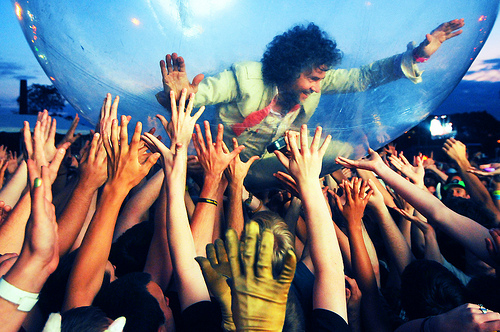
Photo by jcbehm

The Chicago Reader delves into an interesting topic in this week’s issue asking, “Do festivals like Pitchfork and Lollapalooza have the right to restrict photography in a public park?” They’re specifically talking about the ban on professional cameras and detachable lenses at these type of concerts. On the one hand, yes of course. The concert organizers have leased the space, and for that fee, are able to make rules that wouldn’t otherwise apply – like, first and foremost, charging an entry fee.

But the writers talked to civil rights lawyer Mark Weinberg, who frames it as an “interesting constitutional question” — namely, can the government enter into an agreement with a private party that takes away a fundamental right of its citizens? On top of that, Weinberg says, it’s “an arbitrary and unreasonable restriction” because it’s not about security, but about compensation or brand management or vanity. It’s because the performers want to be able to control, and to make money off of, their own images — and they don’t want you to. (You’re welcome to take a lousy point-and-shoot shot, of course.) As the article says:

“Concert promoters are trying to control something—the creation and dissemination of images taken at an outdoor concert in a public park—that is largely beyond their control, and they’re starting to look silly doing it.”

Silly or not, this seems like one photography rule that is unlikely to change.

Article from Chicago Reader

Social Security Benefits, Not for Everyone

Bill Bowersock and Shawn Nee’s “Thank You For Your Call” documentary video on KNBC’s “The Filter With Fred Roggin.”

More Bay Area Police Wearing Cameras

Calling it an “unstoppable” trend, the San Francisco Chronicle is reporting that police in the Bay Area have jumped on board the wearable camera wagon. (We’ve posted on Vievus before – they’re devices you can clip to your bag or shirt to capture your perspective for four hours.) Law enforcement have come to see the devices as protection — a way they can “show their side” in a “YouTube society,” as Officer Ronnie Lopez of the San Jose Police Department put it.

I agree. Ain’t nothing wrong with both sides having video evidence of what went down during an incident.

There are considerations though. On the suspect’s (or “person of interest”) side, can the police be trusted not to delete or alter footage? And on the officers’ side, will the use of video inhibit them or make them apprehensive about using force even when it’s necessary? (See Seattle cop punching jaywalker and all the uproar that provoked.)

As Brentwood (CA) Officer George Aguirre said:

“I’d rather you see what I did than hear accusations,” said Aguirre, who does traffic enforcement on a motorcycle and commercial vehicle enforcement in a truck. “When you do everything you’re supposed to do and someone challenges you, there’s nothing better than being able to show the video to them or my supervisors.”

Article from San Francisco Chronicle

NYPD Rankled Over Javits Center Photos

The New York Times’ Lens blog reports today on photographers’ rights, noting the case of photographer George Hahn, who was recently harassed by an undercover officer while taking a nighttime photo of the Javits Center in New York City. Hahn says that he was on a public sidewalk, but that didn’t stop the officer from barking out a gruff, pointed, “Can I help you?” (No, Officer, I usually prefer to work alone….)

There are terrorists and there are architecture enthusiasts. You’d think the NYPD would be able to distinguish between the two, wouldn’t you?

Article from Lens

Social Security Equality On KNBC

Photo by Shawn Nee

The local LA politics show “The Filter With Fred Roggin” is doing a segment on social security equality,  interviewing Bill Bowersock and using Shawn Nee’s documentary video. The issue has gained a bit of traction over the past week, from an initial post on LAist.com, to The Atlantic, Dan Savage and The New Yorker. Not bad for a little-discussed civil rights issue.

If you’re in the Los Angeles area, be sure to tune in Wednesday night, July 28, at 7:30 pm on KNBC’s digital channel (Charter 304, Cox 804, Time Warner 225, Verizon FIOS 460 and on Channel 4 Sunday nights at 11:30 pm). If you’re not, you can watch the segment here after 10 p.m.

$200m Find at Garage Sale

UPDATE: The AP is reporting the Adams family claims the negatives are fakes.

Garage sale hunting paid off for Rick Norsigian. In 2000, he bought two boxes of negatives at a Los Angeles warehouse sale for $45 (bargained down from $70) and kept them under his pool table for two years before he realized they might be worth something. After years of research and testing, they’ve now been authenticated as early Ansel Adams prints … worth $200 million.

Article from CNN


Spam Blocked