Archive Page 55

Civil Rights & The Beatles

Two amazing photography collections surfaced in the news this past week, and while they’re of vastly different subject matter, they both defined the 1960s in their own way.

Frederick Baldwin was taking photo of polar bears when an introduction to civil rights leader Hosea Williams gave him entrée into the world of “longshoremen halls, meetings and rallies of civil rights protestors and first-hand access to key locations” in 1960s Savannah, GA. Now, Chauncey Mayfield, who inherited the collection from his father who was involved in the movement, has gifted 50 black-and-white Baldwin images to the Ralph Mark Gilbert Civil Rights Museum in Savannah. The collection is one of only three in the US.

Read more at Savannah Now

And cinematographer Stephen Goldblatt has given over a box of never-before-seen publicity shots of the Beatles from 1968 to go on display at UC Berkeley. The negatives sat neglected for four decades while Goldblatt made his name in Hollywood and didn’t think much of his earlier brief photography career. “Still photography hasn’t been my career for a long time. That’s why these negatives just sat there,” Goldblatt said. Twenty-five black and white images will be on display at the UC Berkeley Graduate School of Journalism Gallery through January.

Read more at San Francisco Chronicle

arh585

Photo by Aleksey Myakishev

The President, In Pictures


Photo by Pete Souza

So there’s a few people in England who have their knickers in a twist because Prime Minister David Cameron put a “vanity photographer” on the payroll. They say in these austere times it doesn’t make sense to pay someone to “take flattering pictures of him and other ministers.” While instituting this  job in the US’s current economic climate would no doubt be met with similarly strong objections, we’ve had an official White House photographer going back to 1960, when President Kennedy appointed Cecil W. Stoughton.

I think our country looks upon the job not as a “vanity” perk and more like an incredible opportunity to document history. Sure, there are plenty of feel-good photo ops, but then this photographer also has unrivaled access to some of the most important events in history. Who can forget the photo of a shell-shocked Jacqueline Kennedy looking on as Lyndon Johnson took the oath of office  in Air Force One after President Kennedy was killed? (By Cecil W. Stoughton of course.)

And, for better or worse, photos of the president can have a huge impact. Former President George Bush said last week he regretted allowing that infamous picture to be taken of him staring out of Air Force onto a devastated New Orleans after Hurricane Katrina. He called it a “huge mistake” because it reinforced the perception that he was  totally removed from the disaster. (The photo wasn’t taken by his official photographer but by Susan Walsh, Christopher Morris or Mannie Garcia, depending on who you talk to.)

National Geographic takes on the fascinating  topic in this month’s “The President’s Photographer,” which features the recollections of all nine who’ve held the job (only five of which are still living). Along with the show premiering November 24 on PBS, there is a companion book of both well- and little-known images of recent US presidencies.

CBS’s “Sunday Morning” also did this piece on Souza and the role that’s worth a view, if you can stomach the horrible reporter. (Other than that, it’s good.)

The Terrible Myth

In light of the extremely lenient sentence that ex-BART cop Johannes Mehserle received last week for killing an unarmed Oscar Grant, it seemed appropriate to post this excerpt from a speech William Kunstler gave in the 1970s regarding the legitimacy of the United States justice system.

The above video is also included in the thought-provoking documentary William Kunstler: Disturbing the Universe.

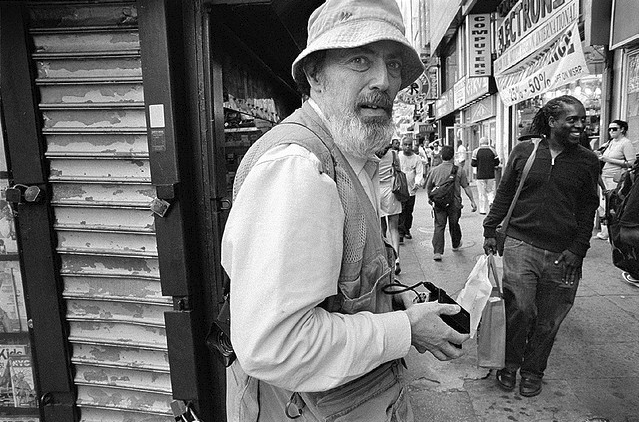
Bruce Gilden

Photo by Maria V. Szulc

What Would [Insert Great Photographer] Do?

There  is no manual to take a great photograph. But the next best thing might be to hear how seven masters of the craft approach the task.

The UK’s Independent asked “the world’s greatest living photographers,” from Mary Ellen Mark to David LaChappelle, who toil in different genres from documentary to portraits.

Among their advice: don’t overthink it, be real, cultivate your obsessions. And we also learn, if you’re really good, you’re probably crazy in some way.

Source: The Independent

Culture Mob Interviews Music Photographer Danny Clinch

Born in New Jersey, Danny Clinch went to the New England School of Photography and eventually landed an internship with Annie Leibovitz, famed Rolling Stone photographer. Since then, he has toured with The Police, filmed Ben Harper, and still finds time to play the harmonica.

To read the full interview check out Culture Mob.

To see more of Clinch’s work head to his website.

Witness to Violence

“When I arrived in Juarez,” says Antebi, “within an hour, over the police scanners, a body has been found. And maybe 30 minutes later, another body.

“And then another body. And by the end of the day, it was 10. The next day, 10. The next day, 10.”

Source: CNN

The “Tiny” Apple

In world that more often than not goes to the extreme,  maxes things out, and super-sizes everything, filmmaker Sam O’Hare chose to follow his own miniaturized path by pulling a Wayne Szalinksi on New York City in his wonderful and tiny short film, The Sandpit.

What’s amazing about O’Hare’s miniature world is how much it mimics the insect world. For instance, the helicopters look just like dragonflies stopping for a quick drink at the water’s edge before they leave as quickly as they arrived. And of course, all of the people resemble marching ants, hustling in and out of their nests, searching for their next bite of food.

I don’t know about you, but I’m ready to bust out the Legos and Tonka trucks.

“Seen and Unseen”


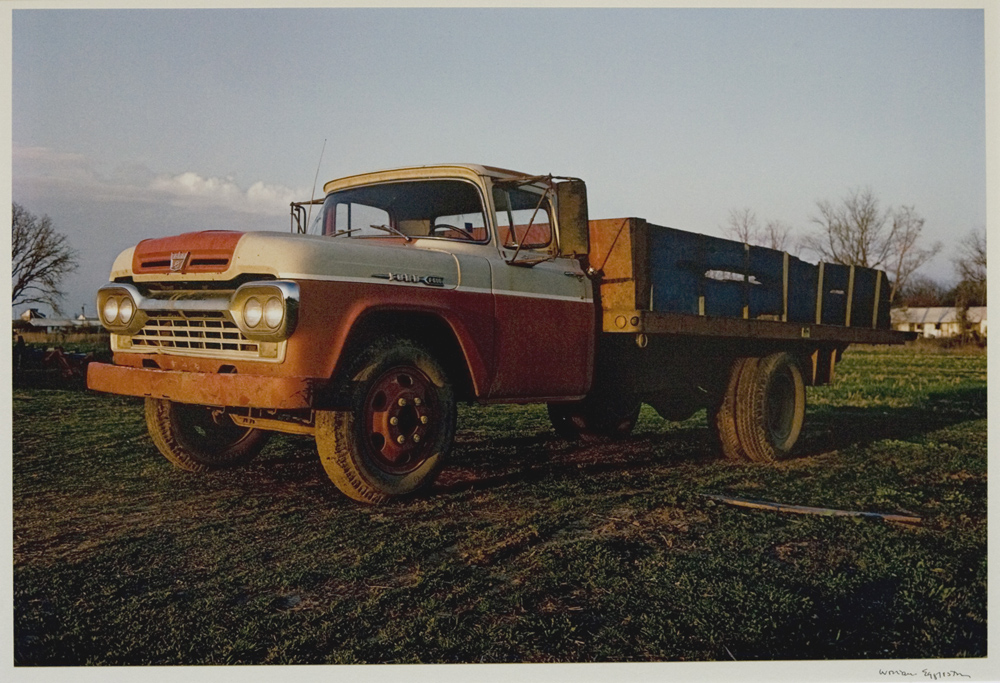
Untitled, 1972  Photo by William Eggleston/Courtesy Edward Cella Gallery

Private art dealer and historian Carole Thompson will be giving a talk called “Seen and Unseen” on her insights into the work of William Eggleston at the Edward Cella Gallery Saturday, November 6 at 4 p.m. The program is free and open to the public, but you have to reserve your spot by calling (323) 525-0053.


Spam Blocked