Archive for the 'Photojournalism' Category


Vandals Have It Out For Olympian Photographer

Tony Overman, a longtime photographer for The Olympian in Olympia, Wash., has gotten on the bad side of some local thugs, and they’re not messing around. His home was tagged with anarchist symbols, his tires were slashed, and the paper’s delivery truck was painted with “Overman snitch,” along with paint thrown on the building. Overman believes this is the work of anarchists he’s photographed at rallys — photos which, in some cases, have resulted in their arrest.

As KOMO-TV reported:

Overman was assaulted last year when a woman spray-painted his face and camera as he photographed an anti-police brutality march. His published photos were later used to identify and convict the woman.

The photographer’s images of a man throwing rocks at a bank were also used by prosecutors. Overman believes that group is now sending him a message, but says he won’t be intimidated.

As Overman told the station: “This is an organized effort to name me specifically, and come to my house and terrorize me,” he said. “That’s really freaking scary.”

Last year, Overman described on his Facebook page what happened to him at the rally.

“… got assaulted by a group of anarchist street thugs. Spray paint in my face, cellphone broken, spray paint on my camera, shoved around, threatened to be thrown off the bridge into the water. First Olympia police on scene wouldn’t do anything unless I pulled the assailants from the group myself.”

Scary indeed.
Source: KOMO-TV (via Romenesko)

Push Comes to Shove for Arizona Police

This week at a contentious school board meeting in Tucson, KOLD News 13 photographer Edgar Ybarra was shoved by Tucson Police officers and barred from covering the event.  Police defended their actions and said he was in the way; Police Chief Roberto Villasenor told KOLD he “was standing right in the pathway” and refused to leave. Ybarra said he was just trying to cover the story. The video shows what seems to be unnecessary aggression against Ybarra. 

As the Tucson Weekly reports:

KOLD cameraman and filmmaker Edgar Ybarra, who was following police and Castillo with his camera, was roughly pushed by the police and forced out of the building along with Baldenegro, Garcia, Rodriguez and several other activists. (It’s important to note that Ybarra tried to get the police to let him back in so he could continue to work, while his reporter co-worker waited for him in the lobby. They refused to let him back in, although they did let another cameraman in to continue working.)

Maybe shoving is something taught in police school in Arizona? It seems so by the looks of this video, where a 15-year-old girl is slammed to the ground by Phoenix Police Officer Patrick Larrison. (Go to about 1:56 if you want to see something truly alarming.) Amazingly, the police department wasn’t aware of the incident until a staffer saw the video on YouTube and alerted the higher-ups. There is now a criminal and internal investigation underway in that case.

Source: KOLD and Tuscson Citizen

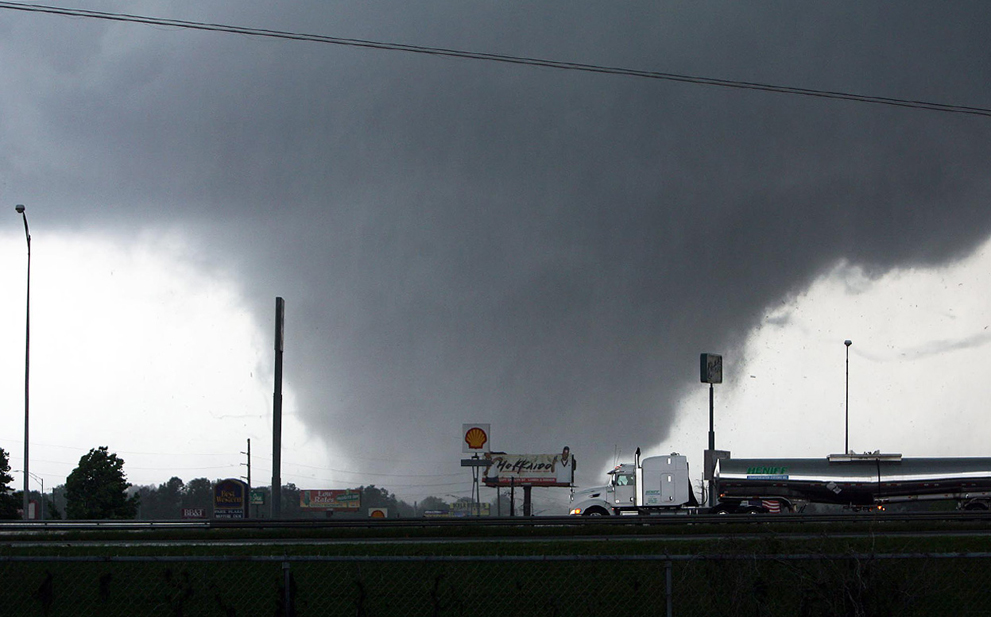
Getting the Iconic Tornado Shot

Photo by Dusty Compton/Tuscaloosa News

Poynter.org has the story behind the Tuscaloosa News‘ photograper Dusty Compton’s photo, which made the covers of newspapers across the country, and his experience covering the aftermath.

The most challenging aspect of covering the tornado, Compton said, has been figuring out when to intervene.

“We were there before the firefighters and police officers were there yesterday, and we were walking through rubble, not knowing whether everyone was out of it yet,” said Compton. “I wondered, ‘Should I be shooting photos or should I be lifting boards and bricks to see what was underneath it?’ ”

At one point, while Compton was taking photos of a house that had been destroyed, he saw two people calling out a woman’s name. They said they weren’t able to find their friend, who had been in the house that Compton was photographing.

“I put my camera over my shoulder and started calling for this lady’s name,” Compton said. “We didn’t find her there.”

Source: Poynter.org

Reaction to Death of Photojournalists

The LA Times’ James Rainey writes on the reaction of in the photojournalism community to the deaths this past week of two acclaimed and popular photographers, Chris Hondros and Tim Hetherington.

Some photographers pulled back from their work. Others vowed they would stay in the game but change their personal rules of engagement. Many revisited their worst misgiving — that no matter how many times they risk their lives, much of the public can’t be bothered with misery in far-off places.

Photographer Ashley Gilbertson talks of an experience he had after an Iraqi woman was killed by insurgents and how it changed his perspective:

“Standing there at her funeral,” Gilbertson said, “I thought nothing is going to bring her back. It all just became too much. I felt like I wasn’t helping anymore. Readers didn’t seem to be engaging. I felt like I had to find a different way to do this.”

It’s kind of hard to imagine the drive and passion one must have for such work to willingly travel into some of the scariest places on earth. Many escape one close call after the next, but as recent events remind us, you can only tempt fate so many times.

As a recent Newsweek piece says:

Anthony Feinstein, a professor of psychiatry at the University of Toronto, has plumbed the psyches of some 350 veteran combat journalists, finding that nearly a third suffer from posttraumatic stress disorder, sparked in part, he believes, by the tension between being an actor and an observer, seeing suffering but not helping. Many are burdened with a sense of alienation, unable to explain to friends in the “straight world” what they’ve seen and why it keeps drawing them back. Some have lost all perspective on what they’ve experienced. War reporters are unique, Feinstein concludes in his 2006 book Journalists Under Fire, because for them alone, “war is the catalyst, not the nemesis, to their creativity.”

Source: LA Times and Newsweek

The Fauxtog Does It Again

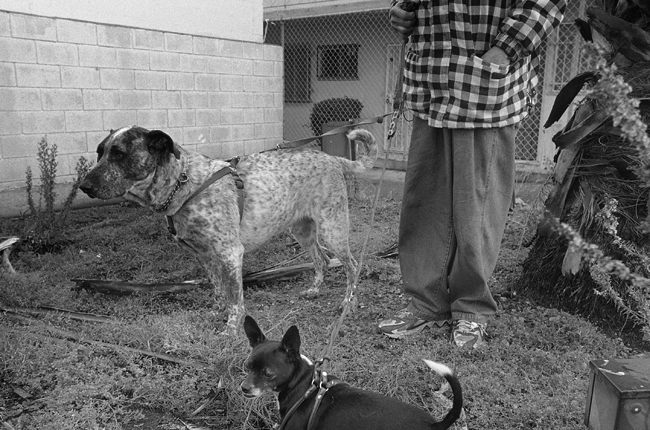
discarted

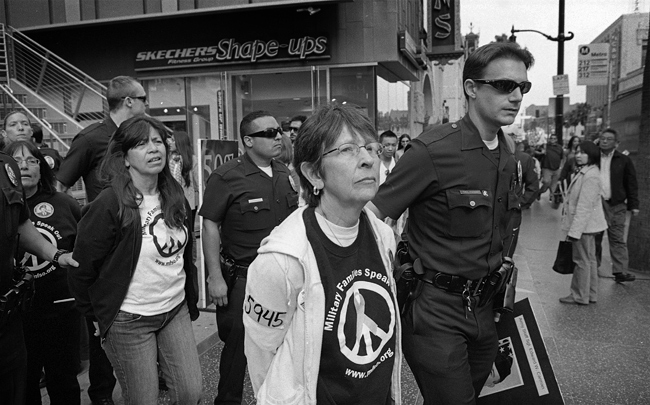
I’ve been called a lot of things in my lifetime, some good and some bad.  But after the Espinoza video was released in 2010, a working photographer based in Los Angeles, who I thought was a friend, sent me an email calling me a fauxtog — ouch.

Hate this fauxtog more than the drunkk

So it’s a great feeling when you’re the only photographer to capture the most important moment of the anti-war rally that took place in Hollywood on March 19 — which was the arrests of 11 brave members of Military Families Speak Out for staging a sit-in at Grauman’s Chinese Theatre.

Continue reading ‘The Fauxtog Does It Again’

Photojournalism: Brought To You By You

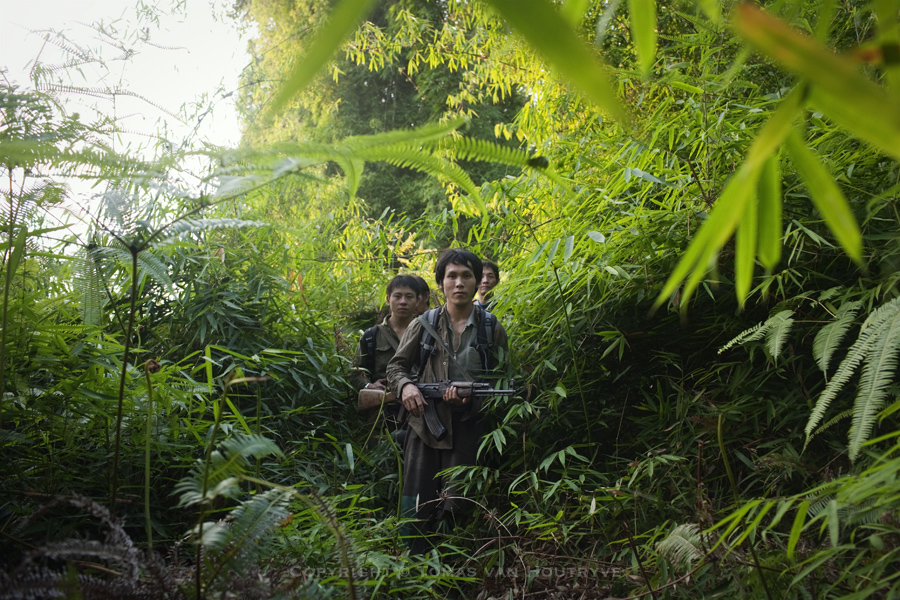
Photo by Tomas van Houtryve

Wired’s Raw File blog has a report on  Emphas.is, the new crowdfunding site for photojournalism. In it, acclaimed documentary photographer Tomas van Houtryve  talks about his experience as one of the first to use the site since its much-delayed launch on March 7.

Van Houtryve, who is raising money for his “21st Century Communism” project that documents the remaining Communist countries, seems at the same time excited about the site’s potential and frustrated about all the technical glitches he’s experienced so far — he actually had to start the project on his own site first until Emphas.is could get its act together. Still, he says:

“Backers have started to pose relevant questions. As my project proposal has made its way through social networks and attracted support from strangers, I’ve made some really fruitful new connections. In addition to generous funding contributions, several individuals have stepped forward with key contacts and very precise and helpful advice. I have already managed to make stronger photos due to their input. This is a pleasant shift over the lone-wolf existence.”

The model for Emphas.is is the same as Kickstarter, only it’s solely devoted to photojournalism projects, so presumably you sort the wheat from the chaff and attract people who are very committed to photojournalism. Plus, they’re promising world-class photographers are going to use this platform, and the backers will get to connect to projects in a personal way.

As the site says, “Apart from the satisfaction of seeing an important project realized, you are invited to tag along on the journey.” It remains to be seen whether this model could be a savior of sorts for photojournalism, but it does look like there will be some good journeys to tag along on.

Call for Entries: Casey Medals for Meritorious Journalism

The 17th annual Casey Medals for Meritorious Journalism is calling for entries for outstanding reporting on disadvantaged children and families. The categories include print articles and series, as well as photojournalism, multimedia and video.

Winning stories offer a fresh take on a significant issue, show enterprise in research and reporting and demonstrate masterful storytelling and impact. Judging is conducted by respected journalists and journalism educators.

+  First-place winners receive $1,000 and are honored at a ceremony in Washington, DC.
+  The contest is open to news organizations with an independent voice (members of advocacy groups and professional associations are not eligible).
+ Work must have appeared in the 2010 calendar year, from January 1 to December 31.
+  The deadline is April 15, 2011.

Work from a variety of big and small newspapers, magazines and online outlets have won in the past. For more information, go to the University of Maryland’s Journalism Center on Children & Families.

Photojournalism and the Hipstamatic App

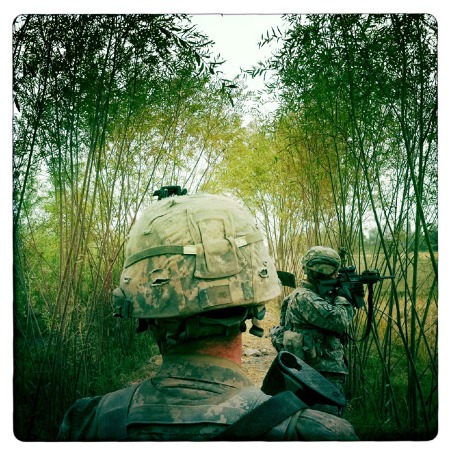
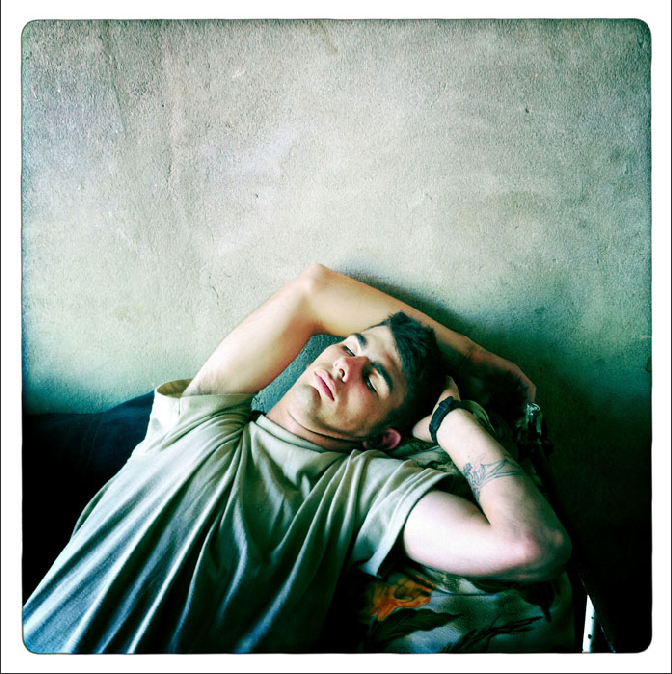
Photo by Damon Winter/New York Times

UPDATE: Damon Winter won POYi’s Newspaper Photographer of the Year too.

When New York Times staff photographer Damon Winter won third place in POYi’s feature competition last week for wartime photos he took on his iPhone using the Hipstamatic app, some people balked. Photojournalism, as practiced by the greats with real cameras, was officially dead. Others said that’s a naive viewpoint; there are no truly objective photographs — and the photographer’s tool doesn’t make or break a great image.

To me, they look a little like ads, or still photography from a David O. Russell film. It doesn’t strike me as great photojournalism, despite Winter being a very skilled photographer, no doubt. That said, maybe I’m old fashioned. There is something about the purity of classic photojournalism that resonates more for me.

As for Winter’s take, he couldn’t submit to an interview with Poynter.org on Friday because he is in Afghanistan, but he did release a statement to the media site.

In part, it says:

I could not have taken these photos using my SLR and that perhaps is the most important point regarding my use of the camera phone for this story. Using the phone is discreet and casual and unintimidating. The soldiers often take pictures of each other with their phones and that was the hope of this essay: to have a set of photos that could almost look like the snapshots that the men take of each other but with a professional eye.

People may have the impression that it is too easy to make interesting images with a camera app like this, but that is not the case — just as it is not the case that good pictures automatically come out of exotic places. At the heart of every solid image are the same fundamentals: composition, information, moment, emotion, connection. If people think that this is a magic tool that makes every image great, they are wrong.

AP Photographer Captures Bomb in Real Time

A photographer captured a dramatic explosion in the Iraqi city of Kirkuk. While filming the aftermath of a series of car bombs, another blast happens nearby, knocking the photographer to the ground. (Feb. 9)

Spike and Duke

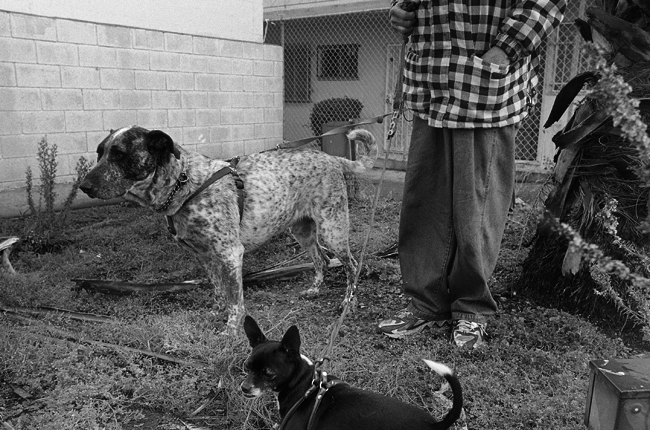
Shawn Nee / discarted


Spam Blocked