Archive for the 'Photographers’ Rights' Category


Now Easier to Sue for Paparazzi Pics

An amendment to an anti-paparazzi law went into effect today in California that allows celebrities and others to sue media outlets for publishing photos of them that were taken illegally. As the LA Times reports, it:

Allows celebrities and others to sue for up to $50,000 when someone takes and sells their pictures without permission while they are engaging in “personal or familial activity,” such as taking their children to school.

The obvious problem with this law is what exactly is “personal or familial activity”? It’s so broad and impossible to define. So, taking children to school while in public would be considered a violation, but leaving a grocery store is not…or is it? Eating at an outdoor cafe in public? Shopping in public?

As intrusive or aggressive as the paparazzi can be, there is just no legitimate way to curb the practice. And enacting laws that restrict real journalistic activities sets a bad precedent. As the general counsel for The Reporters Committee for Freedom of the Press said on their web site:

Nobody is ever going to be able to successfully prosecute one of these actions. Nevertheless, the initiation of even meritless lawsuits has a chilling effect on legitimate news gatherers.

Guam Confused on Free Speech

The government of Guam doesn’t believe in photographers’ rights or free speech apparently. Maybe they don’t even know what they are.

Local businessman James Adkins took photos of a traffic accident in October and was arrested when he wouldn’t hand his cell phone over to police. He was charged with “obstruction of governmental operations” and “failure to comply.” 

Adkins filed a $3 million dollar lawsuit against the Guam Police Department for violating his rights and The Pacific Daily News reports that the government has just filed to dismiss the suit. The attorney general’s rationale? That  it was “not at all obvious that the ‘taking of photograph’s in one’s car on a public road’ has ever been deemed free speech.” OK, so  in Guam photography in public is a gray area.  

From Adkins’ statement:

“I was arrested because I took pictures of a car accident near my house. I committed no crime and I did nothing wrong. I filed this lawsuit because I believe that these police officers think they are above the law, they can arrest and incarcerate people without cause, and they can get away with it. I also believe that the Guam Police Department condones this type of behavior by its police officers. This is wrong and it has to stop.”

Police Quash Fan Photos of Royals

We posted earlier in the month on how England’s Royal Family is trying to prohibit photographs taken of them on their estates. The problem in recent months has been that the Royals felt their privacy was being invaded as they were caught on a few occasions doing some less-than-flattering things, and they maintain they’ve always offered up staged photo opportunities (that, really, are the least they could do for their “subjects”). So it’s all the more suprising that fans’ cameras were seized by police as the Queen Elizabeth and other family members made their way to church on Sunday.

Norfolk police have admitted they acted on their own and that it was a mistake. But still, it’s a scary precedent to set, and all the more so since it’s regarding something as harmless as fans taking photos of a public event – of the most public and revered family in the country no less! As Matthew Sinclair from the watchdog group TaxPayers’ Alliance says in the Daily Mail, “There needs to be a sense of proportion and this seems to have been completely lost in this case.”

Article from The Daily Mail

Interns = Free Labor?

Big-deal photographer James Nachtwey wants a topflight intern but doesn’t want to pay for him/her. Outrage or industry standard?

Read the debate on Gawker.

NYC Cop Harasses Photog, Claims “Frozen Zone”

Apparently the sidewalks around the UN headquarters in New York are a “frozen zone.” This is yet another fine example of police officers overreaching to justify trying to prohibit a legal activity. And their tool of choice? The “Patriot Act” of course. Hey, didn’t that became irrelevant along with its enabler anyway?

Perhaps this cop should go back to the academy to brush up on some laws. Federally owned sidewalk? Credentials? Signs? No asking questions? Yikes.

A Case for Photographers Rights in 11 Points

For an 11-point analysis of Shawn’s incident with LA Sheriffs in the Hollywood and Western Metro station back in November, check out the Magic Flute Fine Art Nudes blog. (Yes, of all places.)

Thanks to photographer/blogger Stephen Haynes for providing such a thorough and thoughtful look at the situation – where the gist is basically photography is legal and this deputy was out of line. (Warning: Photos on the site are NSFW.)

Chicago Police & Accountability

In his weekly crime column for Reason magazine, reporter Radley Balko writes about the notoriously corrupt Chicago Police Department’s efforts to block people from using the only methods available to them to hold police accountable – namely, recording encounters and filing lawsuits for misconduct. Running down all the scary cases of bad CPD behavior, Balko argues there should be a clear policy that prohibits police from interfering with audio or video recordings, which is a great idea that we wholeheartedly agree with but seems like a pipe dream at this point.

Hey, Where Is Everyone?

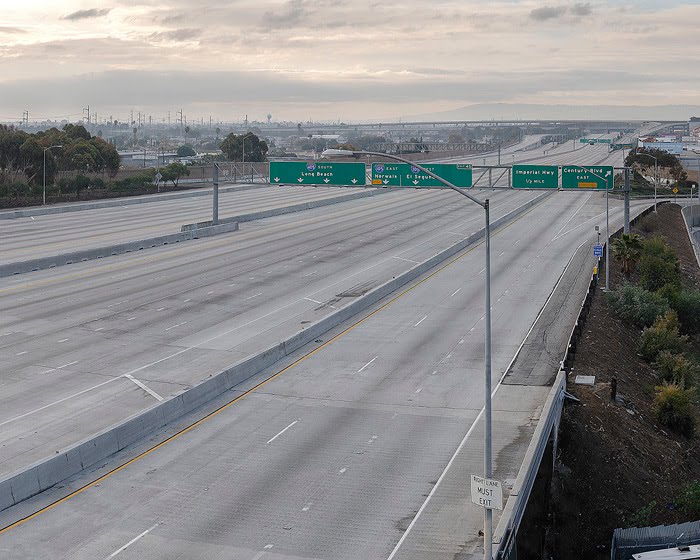
In photographer Matt Logue‘s book, Empty L.A., he captures the country’s second biggest city totally and utterly desserted. The book got an honorable mention in the Photography.Book.Now competition.

To see more from the book, go to the Lenscratch blog.

Photography *Is* Suspicious


Photo by Andrew Cichowski

When will photographers learn to take their stinking artsy photography someplace other than public?!

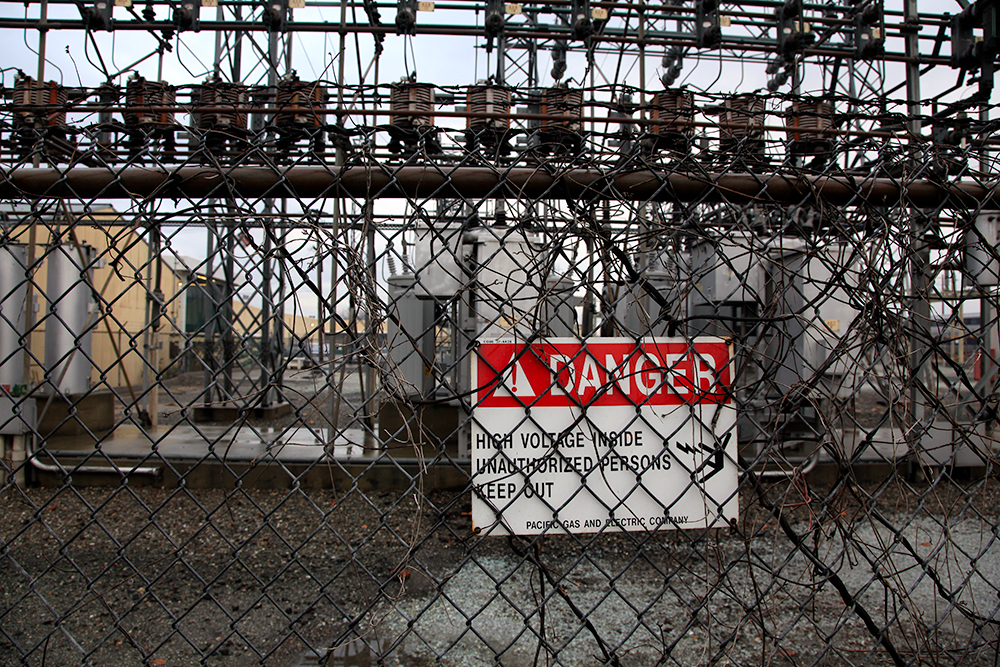
In San Jose this past weekend, photographer Andrew Cichowski writes on his blog  how he was stopped for taking photos of a fence around a train station. The police wanted to know why he was “suspiciously photographing industrial stuff for.” Despite admitting that nothing about what Cichowski was doing was illegal, the two police officers ran his ID, got his social security number and took photos of him. Eventually – and after two more squad cars arrived -they determined Cichowski was not a terrorist threat, but they still copied his CF card and two flash drives onto a laptop.

Cichowski calls this a waste of time and taxpayer dollars, but we call it a scary infringement on his rights. Those cops were way out of line, and they broke so many laws with that detainment it’s mind-boggling. But, hey, always gotta be vigilant about terrorists shooting in daylight.

Also this weekend  in California, blogger Mojoey writes about being told to stop taking photos of an Arco gas station in La Mirada. Which is just puzzling because what’s the reasoning behind prohibiting photos of a dumpy little gas station in So Cal? Are they trying to claim terrorism or trademark infringement or private property, or what? For good measure, Mojeoey included the Google Maps photo with his post. Yep, the photos are already out there, folks. Protesting is futile.

Articles from Redesign the World (via Photography Is Not a Crime) and Deep Thoughts

Still No Photog Rights in London


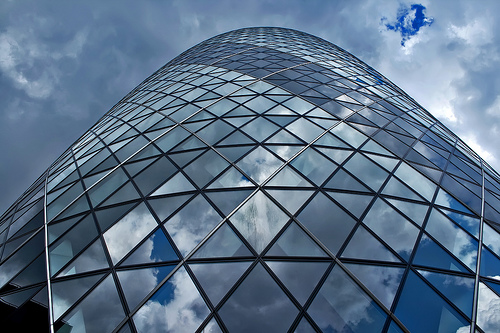
The Gherkin Photo by FromTheNorth

It seems the photographers’ rights situation in London (or lack thereof) has reached a boiling point. After years of egregious harassment and the ensuing complaints, the Metropolitan Police finally released guidelines in early December that said in effect their officers should lay off photographers shooting in public. The next week, renowned architectural photographer Grant Smith was stopped and searched for taking photos of Sir Christopher Wren’s Christ Church in City of London, the financial district.

So, Guardian reporter Paul Lewis decided to do some investigating of his own. Armed with a hidden camera, he went to photograph the Gherkin, a skyscraper and major landmark also in the financial district, and within two minutes, he was approached by a security guard. At one point they actually used the words “hostile reconnaissance.”

Five security guards and police officers later, and two photographers in the vicinity also stopped during the incident (one from the Guardian who was working with Lewis), and nothing was resolved. City of London police defended their actions in a statement that basically said under section 44 of the Terrorism Act they have every right to do this.

Watch the video here.

Article via the Guardian


Spam Blocked