Archive for the 'Photographers’ Rights' Category


Making the Case for Cameras


Photo by threecee

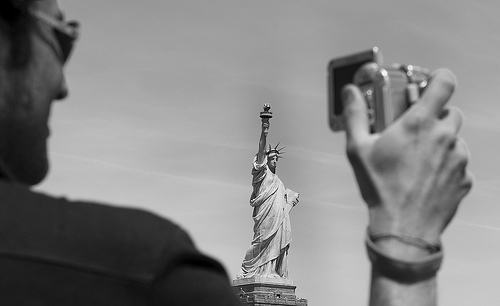
Along with the rest of the right-thinking world, Popular Mechanics believes in photographers’ rights. In an essay on the magazine’s web site, author and law professor Glenn Harlan Reynolds calls law enforcement’s suspicion of cameras “misguided,” claiming cameras make us safer, not the other way around. Citing the Times Square car bomb incident where law enforcement officials sought out private cameras and footage that might yield clues in the case, this guy says photography enhances public safety.

He says:

…it’s a problem that stems as much from cluelessness at the bottom of the chain of command as from heavy-handedness at the top. The officers who crack down on photographers no doubt believe they are protecting public safety. But evidence that photography might be useful to terrorists is slim.

And:

…we need better education among security guards and law enforcement.

But that’s not all:

With the proliferation of cameras in just about every device we carry, digital photography has become too ubiquitous to stop. Let’s have a truce in the war on photography and set our sights on the real bad guys.

To read the whole article, go to Popular Mechanics
Photographing Police – on KPCC/NPR

Today, Patt Morrison of Southern California’s NPR station (89.3 KPCC) talked about the right of citizens to videotape and record police activity – a hot-button issue lately with the Johannes Mehserle and Anthony Graber cases, among others. Guests Peter Bibring of the ACLU and Byron Warnken, law professor at the University of Baltimore, take on the topic, and Morrison even brings up the people who have been harassed taking photos of buildings in downtown LA.

Listen to the whole segment here.

MSM Backs Photographers’ Rights

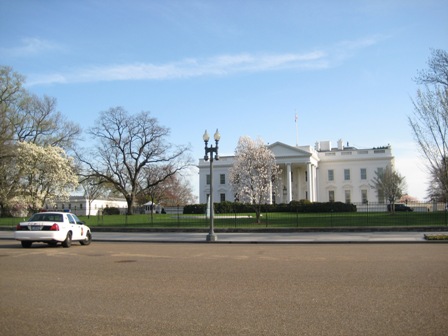
Photographer Jerome Vorus’ July 3rd encounter with DC police on a Georgetown street has gotten a lot of traction in the media, with reports on WashingtonPost.com, NBC Washington, Reason magazine’s blogWe Love DC and DCist, among others. It surprised me because, if you follow these things, it was a pretty run of the mill event. Maddening, ridiculous,probably  illegal, yes — but pretty standard.

But for some reason the media really jumped on it. And the more mainstream outlets that highlight the absurdity of this harassment, the more likely police departments will review their policies and educate their officers.

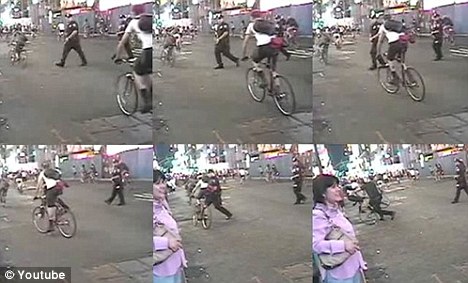
On a related note, in an editorial yesterday, USA Today came out in support of the rights of citizens to film police activity. (Be sure to also read the counter point from the police union. Overall, I just don’t buy the “these videos must be viewed in context in order to be understood” argument. I think the Oscar Grant killing, the Times Square cyclist attacks and the UMD beatings, to name a few recent ones, all stand on their own.)

Cover Model Sues Vampire Weekend

It turns out that lovely 80s blonde staring out on Vampire Weekend’s “Contra” album cover wasn’t in on that. Or so she says — Kirsten Kennis is suing the band for unauthorized use of her photo and she wants $2 million. The band got a release from the photographer, but Kennis claims the signature was forged.

I guess that’s what you get for trying to be all indie ironic. They’re wishing now they just went with the four-guys-against-a-wall shot….

Story from TMZ

Oakland PD Lifts Flickr Looting Photos


Photo by Thomas Hawk

Photographer and blogger Thomas Hawk is helping the Oakland Police Department apprehend looters. He didn’t agree to that, mind you. When reading a San Francisco Chronicle article about police trying to track down looting suspects in the aftermath of BART cop Johannes Mehserle’s manslaughter conviction, Hawk recognized his own photos in the batch. It seems that, to aid their police work, the Oakland PD took photos off Flickr from the riots and released them to the media.

The legal issue here is hazy – at least Hawk’s photos were under Creative Commons, which means people are able “to copy, distribute and transmit the work” with the condition that attribution is given. But the Oakland PD did not give attribution and, seemingly, released them as their own. To cover themselves, the Chronicle uses the credit “Obtained from Oakland Police.”  

Does it seem weird to you that law enforcement are essentially breaking copyright law to aid in their police work? How hard would it have been to include the photographers’ names with the photos?

Post from Thomas Hawk

Why Do Cops Hate Cameras?


Photo by JH

Photographer Jerome Vorus’s exchange with the DC police a few weeks back is getting some play in the DC media, and now Washington Post writer Annys Shin is looking into the topic of police and photography. In a “Story Lab” post she asks, “Why do police hate getting their picture taken?” It’s a good question. If you’re BART cop Johannes Mehserle, it might be because you don’t want any evidence if you just happen to break the law. (Although video didn’t help that New York City bicyclist who got pummeled by the rookie cop in Times Square.)

The DCPD have no excuse though. They’re just misinformed. And misinformation + arrogance = abuse of power.

Shin (shina AT washpost.com) wants to hear from you if you’ve been harassed or detained while taking photos of police, government buildings and the like in the DC metro area.

Stupid Questions

discarted

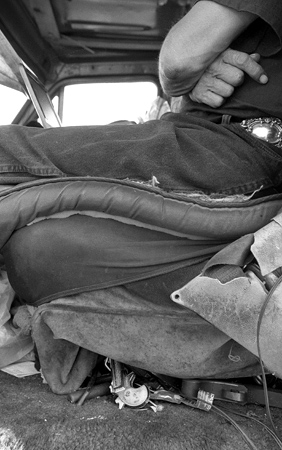
I see something that I’ve never seen before. I bend down in the middle of the street as cars, attempting to avoid the bumper to bumper orgy on Western Avenue take a hard right down La Mirada Ave., and speed past behind me—their hot exhaust fumes graze my back. I’m invincible holding this camera.

Me: Is it loaded?

William (watching a movie): Boy, you ask some stupid questions.

I move my camera and crouch lower. My right knee cracks, and then the shutter as a Beamer lays on its horn and keeps going.

William: I got an M-16 too, but that’s buried in the back.

Photographer Captures DC’s Finest


Photograph by Jerome Vorus

Photographer Jerome Vorus had a little trouble with TSA authorities at Regan National Airport last month, and this past weekend he ran afoul of the Washington, DC police too.

It happened when he came across a routine traffic stop in Georgetown and took a few photos. One of the DC police officers on the scene told him he was being detained and needed to provide identification. Then no less than four officers told him it was illegal to take photos of people without their permission and one has to get approval from the department’s public information officer to take photos of police.

It seems weird that people who are being paid to uphold the law don’t even know it…oh. Wait. It’s DC. One of the most notoriously corrupt, ineffectual governments in the country. Where incompetence isn’t just tolerated, it’s encouraged.

Now it makes sense!

Read the whole encounter on Vorus’ blog here.

Exhibit Eyes Invasions of Privacy


Photo by jonathan mcintosh

As hard as it might be for some people to accept, you don’t own your “image,” you can’t control whether someone takes your photo in public, and no one has to ask your permission. From paparazzi in hot pursuit of starlets to street photographers trying to capture candid moments, it’s all up for grabs. And, sometimes, those are the best shots.

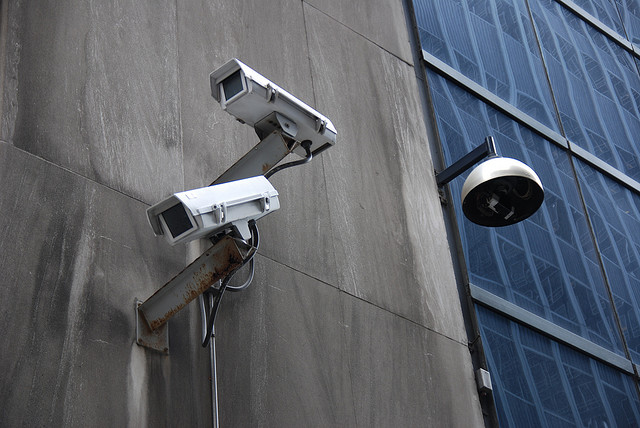
With that in mind, London’s Tate Modern is running the exhibit “Exposed: Voyeurism, Surveillance and the Camera,” which explores the “unseen photographer,” from Marilyn Monroe feeling the breeze on the subway grates to a kissing couple in a 1950s movie theater, and how the viewer is implicated in such covert observations. From the Tate’s web site:

The issues raised are particularly relevant in the current climate, with topical debates raging around the rights and desires of individuals, terrorism and the increasing availability and use of surveillance. Exposed confronts these issues and their implications head-on.

The exhibit will go until October 3.

New Rule Blocks Press From Covering Spill

A new rule went into effect last Thursday that bars journalists, reporters and photographers from getting within 65 feet of the oil-soaked beaches, wildlife and booms in the Louisiana Gulf. What does this mean for news coverage going forward? Oh, just that it’ll be really, really sanitized. We’ll no longer see those heartbreaking/maddening photos of sad birds drenched in oil or booms sitting uselessly in marshlands.

Violators could face a fine of $40,000, a felony charge and one to five years in jail. The Coast Guard’s point man Thad Allen says it’s not unusual at all to establish these kinds of safety zones. Hmm…but it does seem unusual to establish this zone on day 73 of the worst oil spill disaster in US history — after nearly three months of futile efforts that are only working toward making BP and government officials in charge of this clean-up look evermore incompetent. It’s so blatantly self-serving, it’s hard to believe they think we’re that dumb. But they’ll get away with it, so I guess we are that dumb.

Anderson Cooper is pissed — as we all should be! He makes a good case for transparency above, saying a rule like this “makes it very easy to hide failure and hide incompetence.” We have a right to see how this spill is unfolding. This is the system of checks and balances — and we need it; it works quite well in disasters like these. Write your representative. Demand they abolish this rule. Don’t take this one lying down.

Read more about this story on Slate, The Raw Story and The Huffington Post.


Spam Blocked