Archive Page 53

Videographer Attacked by Plainclothes Cops

Have you ever wondered who are the ones watching the watchmen?

Well, it’s people like Jacob Crawford of CopWatch in San Francisco, who learn the hard way that the watchmen do not like being watched and will do anything to blind your prying eyes.

Such as this unidentified female officer who attacked and unlawfully detained Crawford for videotaping her and asking questions that she refused to respond to but is legally obligated to answer. The officer also claimed, “You can’t film people who don’t want to be filmed,” after Crawford was handcuffed, lying face-down in the street, and surrounded by other cops.

Just so you know, former undercover officer, we can film you—and people like Jacob Crawford are going to continue watching you with their cameras. So get used to your newfound viral glory because our cameras are everywhere—actually protecting and serving the public.

More important, your actions were criminal, and if you weren’t a cop, you would be spending the night in jail with the other criminals.

Here’s Crawford’s account of what happened:

“On November 18th I was assaulted by Plain Clothes Officers. We started off our shift at 16th in Mission in Sf by seeing several strange people. I assumed them to be plain clothes officers because I could see vests under their shirts. When they refused to identify themselves I wondered whether indeed these were “on the job” cops. Many cities around the country are known for having rogue units that take the “law” into their own hands, or are involved in organized crime. As I questioned a woman on her involvement she grabbed my camera and ran at me. From all directions came men who neither identified themselves as cops or gave orders. I assumed I was getting attacked, and I was unsure of by who. As I ran into 16th street two cops cars pulled up with lights on, it was at that point that I stopped and let the arriving officers take me down. Within seconds they could see that the move was faulty, and they released me with no charge[.]”

Photographing Dutch Vignettes in Iowa


Photo by Rene Clement

Rene Clement is a Dutch documentary photographer living in New York City. In 2004, on an assignment in Iowa, he happened upon Orange City, a town founded by Dutch immigrants in 1870, and was overwhelmed by its pastoral beauty and landscapes dotted with windmills and tulips. He thought it was “more Dutch than Holland.” He took photos of the locals dressed up in traditional costume for their annual Tulip Festival, and then proceeded to  travel there again and again, imploring the townspeople to pose in somewhat fanciful situations, which they did. The result is a series of photos of what, he says, the town would “look like if its inhabitants, like the Amish, had clung fiercely to the past.”

Clement has started a Kickstarter campaign to help him raise $9,900 to publish his book chronicling the project, called “Promising Land.” As of this morning, he has $3,732.

We asked him to give us his favorite photo from the project, and this is what he said: “It is hard to choose one picture, but Dutch St. Nick, known as Sinterklaas, in the snow is one of my favorites. In Holland, St. Nick is the children’s friend who comes on horseback every 5th of December and brings presents and sweets. For the picture I wanted him more like a lonesome rider like in westerns or the song from the Doors, “Riders on the Storm.” I borrowed the cloth from the Dutch Consulate in New York. We shot this picture outside Orange City, close to a farm, it was below zero and the wind was hard. I photograph with on old Pentax 67 and it would freeze to my hands. We were with a lot of people, people from the farm, and the rider came out with his family. Everybody was excited and patient. I shot several scenes, but at the end of the day, when the sun set and the cold was the most brutal, I shot St. Nick alone against the setting sun. I love the light and the shadows, how the wind goes through his hair and the solitude of the ice field.”

Source: Des Moines Register

ACLU Takes on DC Police in Photog Harassment Case


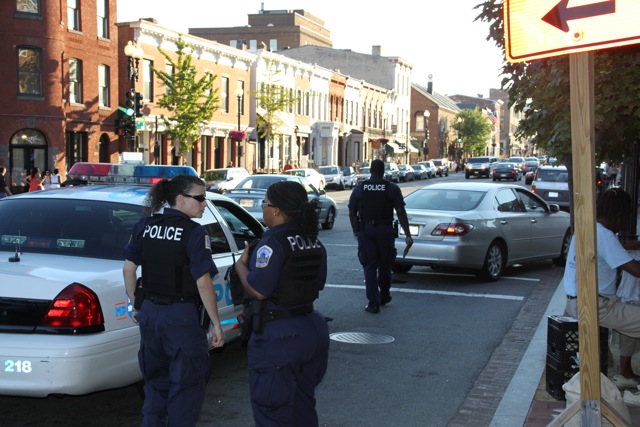
Photograph by Jerome Vorus

This past summer, photographer Jerome Vorus was harassed and detained by DC police when he tried to take photos of a traffic stop in Georgetown. The incident touched off a mini firestorm, with mainstream media outlets like the Washington Post and NBC crying foul. (It always helps when these things happen in a major media hub.) People were rightfully alarmed at the cops’ arrogance (telling him it was illegal to take photos of the police) and their violation of Vorus’ rights.

In a letter to DC Police Chief Cathy Lanier, a lawyer from ACLU’s DC chapter demands the police acknowledge the incident in the form of a settlement and an apology – or  a lawsuit will follow. If this doesn’t make police departments sit up and take notice, it should.

Times are changing, and it’s not fun and games and unlimited power anymore. The ACLU is very proactive on the photographers’ rights issue, and with photographer Antonio Musumeci’s recent settlement with the federal government, they have a pretty good track record of winning. Sometimes the only way you can change institutional behavior, or implement “corrective training” as the ACLU calls it, is with a costly lawsuit. Too bad it’s the taxpayers who will pay for these public servants’ ignorance.

Face of SS Rights on Sitcom?!

Photo by Shawn Nee / discarted

Look who showed up in the CBS comedy “$#*! My Dad Says” as a member of the gay men’s choir – Bill Bowersock, featured in Shawn’s mini-doc “Thank You For Your Call.” It’s nice to see he’s getting some good gigs. (On a side note, Frasier’s dad looks terrible!)

Watch it here.

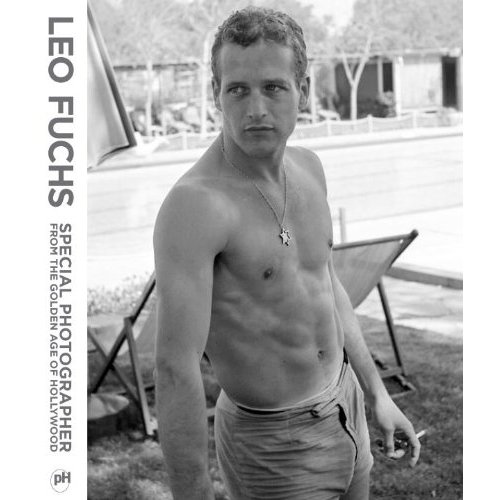
Candid Hot Hollywood, as Shot by Leo Fuchs

Photographer Leo Fuchs got a front row seat during Hollywood’s heyday and shot some of the biggest stars of the 50s and 60s – Paul Newman, Marlon Brando, Frank Sinatra, Audrey Hepburn – on film sets, between takes and after hours.

Special Photographer: From the Golden Age of Hollywood is a compilation of Fuchs’ never-before-seen images from those times. The book is on sale now, or you can get a preview by watching the slideshows on Gawker and GQ.

College students, 1966, Tacoma

Photo by James Eugene Frank

Photography Link Roundup


Photo by Sacha Goldberger

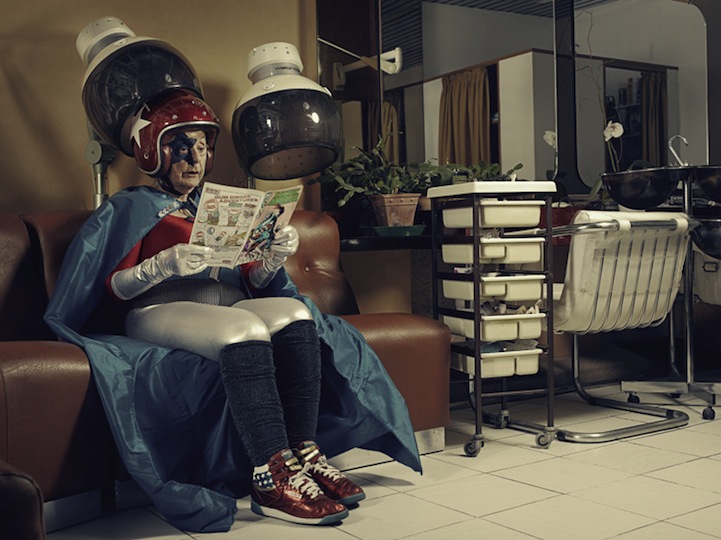
• A grandson decides to cheer up his 91-year-old depressed Hungarian grandmother by dressing her in a superhero costume and photographing her in outlandish settings. Her depression lifts, she has a MySpace page, all is well! [My Modern Met via Boing Boing]

• “Cuba in Revolution” documents the island nation’s epic rebellion through 30 photojournalists’ photos from the 50s and 60s. Now through Jan. 9 at the International Center of Photography. [New York Times]

• A retrospective of California governor-elect Jerry Brown’s style. Or, the loss of hair over four decades. [LA Times]

• The 65th College Photographer of the Year went to Ohio University’s Rachel Mummey. See her work here. [NPAA]

• This is just disturbing: An NYU photography professor is getting a camera surgically implanted in his head as part of art exhibit. The images, taken at one-minute intervals, will be transmitted to a museum in Qatar. [Wall Street Journal]

total solar eclipse in Reims

Photo by Rene Collin

Q&A…The ‘Chasing Sanitation’ Duo


Photos courtesy of Chasing Sanitation

Writer Lisa Dowda and photographer Liz Ligon decided an oft-overlooked population of city workers needed their due. So, in 2008, the Brooklyn residents joined forces to create “Chasing Sanitation,” a project to promote the “oldest green-collared profession,” New York City’s Department of Sanitation workers.

Now that they’ve met their goal of raising $7,500 (and then some) through a Kickstarter.com campaign, they’re talking to exhibit curators and looking for sponsors and gallery venues.

Here, we talked to the duo about the thrill of the chase.

Why sanitation workers?
Lisa: If we chase cops, we’ll get arrested. If we chase firemen, we’ll get in the way, and it’s already been done by countless fans. So we Chase Sanitation workers – and we never stop laughing and crying and being amazed at the stories of their lives. Who knew there were so many germophobe sanitation workers?

Why does it matter that people know who these guys are?
Lisa: Guys and GALS! Because they catch such flack all the time and they’re everywhere, all day, all over the city, every day. Once I noticed one, I couldn’t stop seeing them everywhere. They’re the caretakers of all we discard. No one wants to talk to that person. There’s too much of some sort of elusive societal continental divide between that person and us. That’s what I’m interested in – the person that people just take for granted and shame or ignore but need so inherently.

Why not bus drivers or corrections officers?
Liz: Well, when you put it that way, it does matter that we know who our bus drivers and corrections officers are, too.

Lisa: Ha! I’ve thought about bus drivers. A lot. But there’s 7,000 employees of sanitation and we’re only two people! We knew we had a big project. Especially how we wanted to do it, the time we want to take to chase and interview them. And corrections officers … well, with as many parking tickets as I’ve gotten doing this project, I may be stuck interviewing them from prison anyway.

How do you decide who to approach?
Lisa: It’s all such a feeling, a connection. We’ll get in the car, early in the morning, drive around looking for trucks, try to catch someone’s eye – it’s really all in the eyes. If we can connect to them, we’ll go running up to the trucks at a stop sign or red light. I’ll give them our schpeel, and if they’re willing, Liz will shoot them for about an hour as they work and I’ll chat them up. I’m looking and listening for the strength of their own individual story and the life they live every day.

There must be some serious surprise and skepticism.
Lisa: Always. Everyone.

Continue reading ‘Q&A…The ‘Chasing Sanitation’ Duo’

Photography & the Law: 10 Misconceptions

The law is complicated, and  if you’re not a lawyer and haven’t spent hundreds of hours pouring over legal cases and texts, it’s easy to get caught up in second-hand internet advice and half-truths about what’s legal and what’s not. So it’s helpful when a lawyer breaks it down for for you, as attorney Carolyn Wright does in this post on the WPPI site (which is for wedding photographers, but the information is universally helpful), “Top 10 Misconceptions About Photography and the Law.”

Wright goes over things like photographing copyrighted art in public, fair use, property releases, copyright protection and your employer’s rights to your photographic work — it’s worth a read.

Source: WPPI (via A Photo Editor)


Spam Blocked