Archive Page 46

Photography Link Roundup

Photo: Almost Every Picture #9

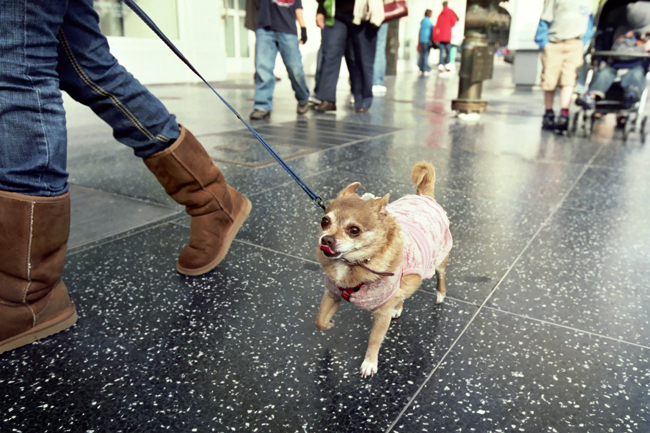
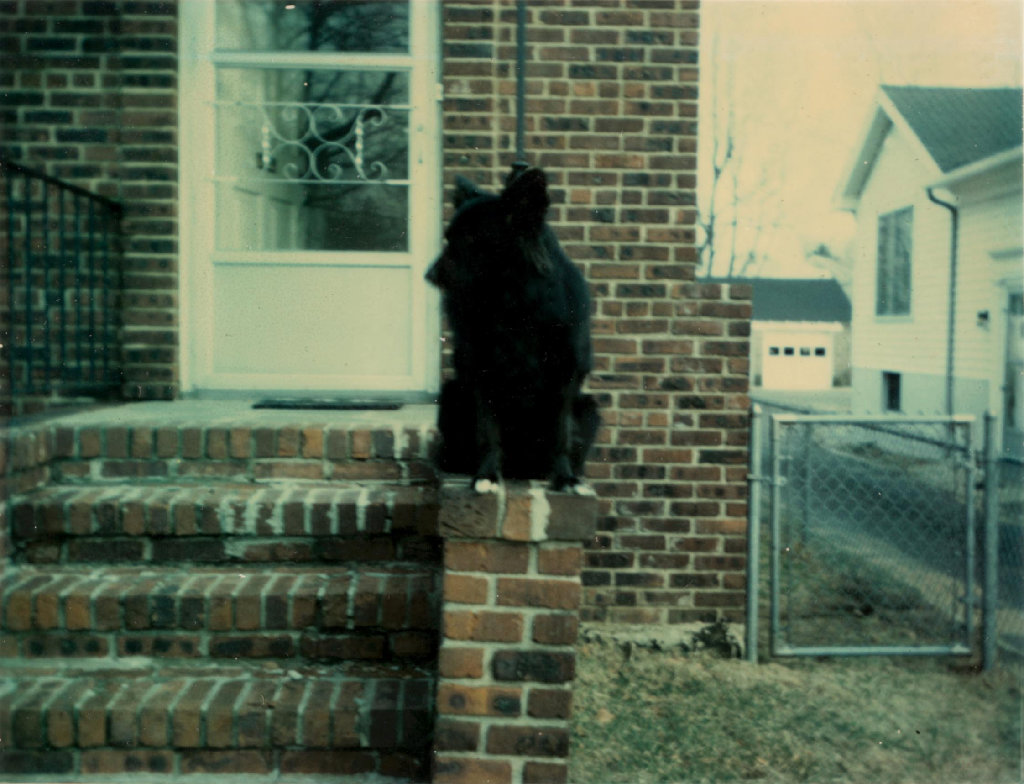
•  Almost Every Picture #9 is a strange tribute to a camera-shy black dog and the most recent installment in Erik Kessels’ long-running found photography series. Dazed Digital has an interview with the gallery who is showing the work here. [KesselsKramer]

•  The recently Oscar nominated Exit Through the Gift Shop introduced the world to Thierry Guetta, aka Mr. Brainwash, the enigmatic French-born street artist.  Guetta is dealing with a lawsuit by photographer Glen E. Friedman for using his iconic Run DMC photo without permission. The Hollywood Reporter likens it to the Shepard Fairey “Hope” poster/AP photo lawsuit; Sean Bonner at Boing Boing disagrees. [THR / Boing Boing]

•  Who was the amateur photographer who first discovered the abandoned  piano in Biscayne Bay? [Miami New Times]

•  NFL sideline photographer Scott Kelby explains how Green Bay Packers QB Aaron Rodgers destroyed his Monopad. [Scott Kelby]

•  Homeland Security is phasing out its color-coded terror warning system. We can all rest easy…until the new warning system is in place. [AP]

Shoot Away, Federal Gov Says

As part of the New York Civil Liberties Union’s lawsuit against the federal government stemming from the Antonio Musumeci incident, they were given the above directive. It states that photographers are allowed to photograph federal buildings nationwide, and the NYCLU is encouraging photographers to carry it with them in the event they come across a problem.

As Lens reports:

The three-page bulletin reminds officers, agents and employees that, “absent reasonable suspicion or probable cause,” they “must allow individuals to photograph the exterior of federally owned or leased facilities from publicly accessible spaces” like streets, sidewalks, parks and plazas. Even when there seems to be reason to intercede and conduct a “field interview,” the directive says:

Officers should not seize the camera or its contents, and must be cautious not to give such ‘orders’ to a photographer to erase the contents of a camera, as this constitutes a seizure or detention.

You can get your copy here.

Source: Lens/New York Times

UPDATE: There have been comments on the web stating you have to provide personal information or log into Facebook in order to download the federal directive.  We haven’t had time to look into the matter, but if the claims are true, that is unacceptable.  Which, is why we’re providing the directive here for you to download as much as you want free of Big Brother’s prying eyes.


Shawn Nee / discarted

Miami Police vs. Civil Liberties – and Guess Who’s Winning?

Just when you think the photographers’ rights issue is dying down a bit because surely — surely! — police departments realize it’s a losing battle considering the ubiquity of cameras, you realize that’s just not the case at all.

In fact, as the Miami New Times reports, it’s “quickly becoming the most hotly contested corner of American civil liberties law.” The paper recounts the story of two Miami residents, Robert Hammonds and Brent Bredwell, who’ve had multiple run-ins with Miami police, resulting in detainments, tickets, jail time, lawyer fees and countless headaches.

Miami Police Department officers, meanwhile, say they only arrest camera-toting civilians like Hammonds when they harass cops. “When you go beyond filming to trying to piss off an officer, you’re subject to arrest,” says Delrish Moss, a department spokesman.

Er, how do I say this without my head exploding? Wrong, wrong, wrong! (But also so illuminating.) There is no law on the books that says you can be arrested for pissing off a police officer. But that’s clearly been the impetus for so many of the incidents we’ve posted on over the years.

Anyway, you have to read this article and hear what Hammonds and Bredwell have been through — including having their video camera confiscated and then, when they showed up at the station to retrieve it, bringing along cameras to film it all, Hammonds was arrested again for “obstruction of justice.” The Miami Beach police even created a “safety” bulletin warning other officers about these extremely dangerous individuals. The flyer, they believe, had a big part in the friends (two more have also been involved) being detained half a dozen times in the ensuing months.

Wow. How is this the US of A? If the ACLU ever had a case, it is here.

Hammonds and Bredwell are working on a documentary project called Man Vs. Pig (see the trailer above), and you can read more at their IndieGoGo site.

Source: Miami New Times

TSA Videotaper Acquitted On All Charges

Remember that guy who was accosted and then arrested by a bunch of hyped-up TSA employees at the Albuquerque airport in 2009? Despite being well within his rights to not show ID and film the airport’s public areas, the group of swarming TSAers and law enforcement were having none of it. Phil Mocek was causing a “commotion” (even though he was completely calm), and the authorities weren’t going to let a little thing like real laws get in their way.

Officer: This is a federal checkpoint. You can’t do it [film] here.
Mocek: I’ve checked into it and I know that I can do it here.
Officer: Well, you can be arrested, then you can check into it more.

Nice! Arrest first, check laws later.

Last week, Mocek was acquitted on all four charges, including failure to obey an officer and concealing his identity.

Source: KOB.com

Get Money & Attention: Where to Enter Your Work

Photo by Shawn Nee /discarted

If your New Year’s resolution was to get some recognition for your work, here are three cool places to submit….

• The George Soros-backed Open Society Foundations has put out the call for the next Moving Walls exhibit. Open to established and emerging photographers, they are looking for work in 13 specific human rights and social justice categories, including the economic downturn in the US and mainstream media depictions of African American men and boys. Winners will be displayed in New York and Washington, DC, and the deadline is April 1. For more info on how to apply, go here.

•  The Pulitzer Center is looking for proposals on what they call “under-reported population issues.” The Center will be awarding grants for international travel in the range of $2,000 to $10,000, and even up to $20,000 depending on the project. Grants are available to journalists of all stripes and nationalities, including photographers. The deadline is rolling. See here for info on how to apply.

•  Slideluck Potshow is a quirky nonprofit that combines art and food. Based in New York City but operating in 40 cities in the US and abroad, the idea is that artists submit multi-media project (up to 5 minutes worth of images) and people bring home-cooked food and gather to watch the chosen slideshows. You might find yourself alongside world-renowned artists and unknowns alike. Find out about submissions here.

IL Takes Several Steps Back, Won’t Protect Recording Police

People in Illinois are looking at fifteen years if they audio-record police activity. Or should I say “still looking”? Because the Illinois Eavesdropping Act makes recording someone in public without their consent a felony. Last year the ACLU filed a lawsuit challenging the law, but a few weeks ago Federal Judge Suzanne Conlon dismissed it, saying there is no First Amendment protections there.  

Although law-enforcement officials can legally record civilians in private or public, audio-recording a law-enforcement officer, state’s attorney, assistant state’s attorney, attorney general, assistant attorney general or judge in the performance of his or her duties is a Class 1 felony, punishable by up to 15 years in prison.

As Reason magazine’s Radley Balko writes, unfortunately, “the law is used almost exclusively against people who attempt to record on-duty police officers.”

While absurd, this makes some sort of sense because allowing citizens to record police activity would likely cause all kinds of grief for that very jackbooted state that is known to be very corrupt.

Source: New York Times

Spotting Circle K’s Where They Are No More


Photos by Paho Mann

It’s a natural condition of aging that you start to remember how things used to be. Like when a Milky Way was 30 cents, when the Wizards were the Bullets, when you had to “star 69” to find out who just called you. It’s a natural progression of life, and it makes you feel old.

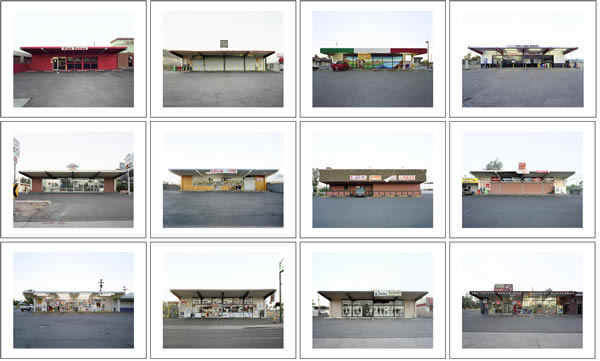
And if you’re around long enough, you’ll also see the architectural landscape of your town change. Photographer and professor Paho Mann took on that idea with his project, “Re-inhabited Circle Ks.” The Circle K convenience store was once ubiquitous, popping up every few blocks, until the business went in a different direction and focused on corner lots.

Mann sought out the transformed convenience stores all over Phoenix and found a tattoo parlor, a dollar store and a tuxedo shop, among others — all with the same unmistakable architecture. He even used city directories and phone books from the 70s and 80s (remember when people used to use phone books?) to create an interactive map, and to explore “the complex relationship between corporate expansion and the manifestation of individualism.”

You can see a gallery of Mann’s work here.

The Vanishing Anti-War Movement

War, it seems, is a bipartisan venture, which is reflected by the fact that Democrats have a favorable view of Obama’s foreign policy, despite its remarkable similarity to George W. Bush’s foreign policy. And though there have been rumblings of antiwar sentiment from some on the Right, Republicans remain strongly in favor of an interventionist foreign policy.

Shawn Nee / discarted


Spam Blocked