Archive for the 'Documentary' Category


In the Blink of an Eye: Mark Rebilas

ea12d_8985

Ever since I witnessed Michael Jordan launching himself from the foul line to slam home the NBA’s 1988 dunk contest, I’ve been a huge fan of sports photography – and this is way before I figured out that I had even the slightest bit of passion for photography.

As a child I collected every Sports Illustrated that featured MJ’s high-flying escapades, fixated by the beauty of these images while wondering where they had come from and wishing I could dunk like my idol. With the ability to touch a 10-foot rim by age 14, but unable to draw all that well, I had my mother buy me some tracing paper and colored pencils to create my own images of MJ posterizing some flat-footed sixth man. For hours I would hover over my desk, palms stained with lead and meticulously copy the SI covers, patiently and carefully following each meandering line as though I were a surgeon.

picture-1

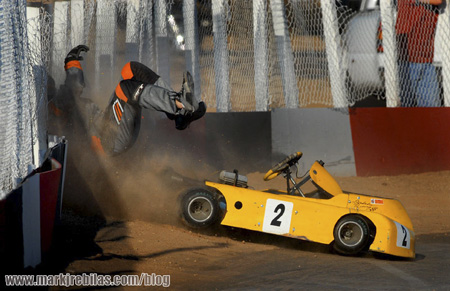
This week I was in childlike awe once again as I discovered Mark J. Rebilas’ website. As a professional sports photographer and son of motorsports photography legend Gil Rebilas, Mark’s images have appeared in ESPN Magazine, USA Today, the Los Angeles Times and on the top sports websites in the country.

What I find most fascinating about Mark is not the fact that he’s funny, self-deprecating and able to capture such beautiful images in the blink of an eye, but that he’s so willing to share his experiences with others while working in one of the most competitive fields in photography. Finally, I no longer have to wonder where images like the ones I worshiped as kid come from.

They come from Mark Rebilas.

Social Impact Workshop Begins at Venice Arts

linda
Photo by discarted

If you’re a passionate and dedicated photographer with the intention of making photography more than just your weekend hobby, it’s almost certain that you have taken a class or two throughout your time shooting.

Held at Venice Arts in Venice, CA, the Social Impact Workshop is a brand new long-term documentary program run by acclaimed photojournalist and three-time Pulitzer Prize nominee Jim Hubbard.

Meeting every other Saturday and ending in late February for a total of 12 classes, the workshop will use presentation, discussion, work sharing, and personal shooting to help students explore their chosen subjects more deeply. And with that, see the depth and quality of their work expand over the length of the class.

Other topics that will be covered include but are not limited to accessing subjects, ethical and legal considerations, and equipment selection. At the end of the workshop students will share their work with the public via an exhibit hosted by the Venice Arts Gallery.

With the combination of Jim’s expertise and an eclectic group of talented people (consisting of all skill levels and one child psychologist) to poke and prod for critiques and advice, there isn’t any doubt that each of us will learn something new and likely incorporate another photographer’s way of working into our own camera bag of tricks.

Highways, Byways and Much, Much More

Photo by let ‘er rip

Today we set out on a cross-country road trip to see some of the great sights the USA has to offer. From Los Angeles to Boston and back again, we’ll get to see this real America everyone talks about, and we’ll be posting some updates from the road. 

In light of that, this piece from NPR seemed especially fitting: Photographer Stephen Shore took a similar journey in 1973, documenting everything from meals to hotel rooms and keeping detailed records in the form of receipts and postcards. His journal was so impressive that it is now being published in book form, called A Road Trip Journal.

Among many notable things about Shore, he sold his first photo to the Museum of Modern Art at 14, published a universally acclaimed book called Uncommon Places, and is widely credited as one of the pioneers of color photography.

Check out a sampling of his very cool photos here.

Listen to NPR’s “Weekend Edition” interview with Shore here.

Have We Met…?

Photo by discarted

There are a lot of characters in Los Angeles, and a few places in particular that are magnets for the quirky, offbeat and strange. So I guess it’s no surprise that if you take photos in Venice or Hollywood you might find someone else has also taken a very similar shot of your subject. (There’s a flickr group called Mirrored dedicated to this concept.)

Photo by discarted

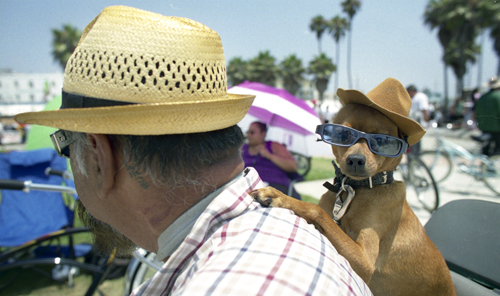
Case in point: this guy in Venice who apparently cruises the boardwalk in a wheelchair with his funny little dog perched on his shoulder. He seems to like attention, and he’s out there all the time.

Photo by eedgejr

But, even so, it is slightly stranger when one of your subjects pops up on a flickr member’s page in another city. Oree and Betty were regulars on Hollywood Boulevard, performing with their talking dolls for the passing tourists. Discarted spent a lot of time with them, mostly at their home, your classic fleabag motel room in Hollywood. Literally. After continued harassment from the police, Oree and Betty pulled up stakes and left Hollywood for what they hoped would be the sunnier, friendlier streets of San Diego.

And that’s where edwardmysers40 found them.

Photo by edwardmysers40

Is Flickr Policing Your Pics?


Photo courtesy of Maarten Dors

Did you know Flickr can choose to delete images it deems inappropriate or not in keeping with their “brand”?

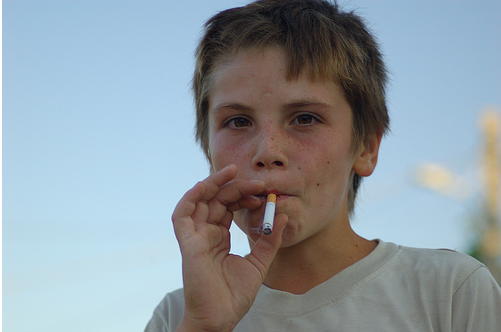
An interesting article by AP writer Anick Jesdanun explores the constraints some service providers willingly impose on their sites. One Flickr member found this out when his photo of a Romanian street kid smoking a cigarette was deleted on “grounds it violated an unwritten ban on depicting children smoking.”

Maarten Dors, the photographer said, “I never thought of it as a photo of a smoking kid. It was just of a kid in Romania and how his life is. You can never make a serious documentary if you always have to think about what Flickr will delete.”

The law though is on Flickr owner Yahoo’s side. It’s totally within a content provider’s rights to police its own content, and, Jesdanun writes, their goal is to “protect their brands and foster safe, enjoyable communities – ones where minors may be roaming.”

Pornography is another issue altogether, but a kid smoking? It’s a reality in many parts of the world — why whitewash it? Ultimately Yahoo agreed with that; after a review Yahoo acknowledged their comunity managers may have been overzealous and Dors’ photo was allowed back on the site. 

Article from the AP via Wired.com.

Talking to…Photojournalist Anthony Karen

Photos courtesy of Anthony Karen

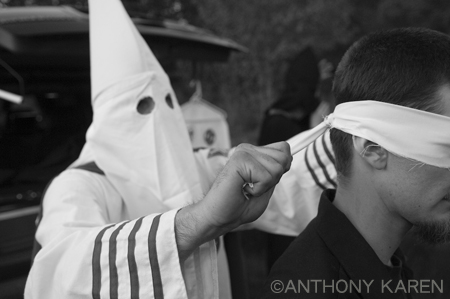
Whether it’s humility, patience, diligence or daring, New York-based photographer Anthony Karen has a personality that’s ideally suited to a photojournalist — because somehow he infiltrates enclaves and subcultures that are notoriously closed off, among them the Ku Klux Klan, shantytowns in Haiti and one of the few surviving leaders of Cambodia’s murderous Khmer Rouge regime.

After listening to a recent NPR interview with Karen, we were curious to know more about his start, his style and his process.

Interview by babydiscarted and discarted.

Why do you take photos?

I used to take photographs because I wanted to; now I also take them because I need to. I have to express myself in some creative way to feel alive — photojournalism allows me to do so many things. It fills my soul to experience the gift of being allowed into someone’s most private moments and the trust they give me to try and capture what’s going on the best that I can. It’s the beauty of creation, going home and seeing what I’ve captured on film. It’s not always a great image, but it’s a moment of time that I’ll always have access to. I can make that experience last forever. And I like to make people “feel” — hopefully it’s not a feeling to blog [about] me and say my images suck, but photography is so subjective. So what can ya do!

Continue reading ‘Talking to…Photojournalist Anthony Karen’


Spam Blocked