Responding to numerous complaints by individuals and public advocacy groups, the NYPD has finally issued a department order reaffirming the rights of photographers and tourists to take photos in the city. The New York Post reports today:
“Photography and the videotaping of public places, buildings and structures are common activities within New York City . . . and is rarely unlawful,” the NYPD operations order begins.
It acknowledges that the city is a terrorist target, but since it’s a prominent “tourist destination, practically all such photography will have no connection to terrorism or unlawful conduct.”
The department directive — titled “Investigation of Individuals Engaged in Suspicious Photography and Video Surveillance” — makes it clear that cops cannot “demand to view photographs taken by a person . . . or direct them to delete or destroy images” in a camera.
This is a big step in the right direction. In a city with so many irresistible photo opportunities it’s a shame there are any impediments to capturing them.
Recently I came across a crime scene in Hollywood where a homeless man had been killed in an alley behind a strip mall. According to a fireman who was there to assist with the trauma scene clean-up, the man had been asleep when a sanitation truck accidentally ran over him, crushing his skull.
Without crossing the police tape I was able to photograph the entire crime scene from the public sidewalk, Barnsdall Park (which is a public park) and parts of the strip mall parking lot that had not been taped off. However, on two occasions I was confronted by LAPD for photographing the crime scene.
If a recent report is any indication, Phoenix seems to be even less evolved than Los Angeles when it comes to photography. Today the blog DowntownPhoenixJournal relays an incident where two amateur photographers were harassed and berated by a police officer, who basically told them they weren’t allowed to take photos of pretty much anything in Phoenix.
The photographers made the mistake of photographing the light rail stop Central Station, which sparked the ire of this particular cop, who accused them of taking photos of a federal building (which happened to be in the other direction, but nevermind that). The list of prohibited subjects, he said, also included the light rail, bus stops, bank buildings, stadiums and street lights. When asked to clarify which statute he was enforcing, the police officer told them to Google it. (Far be it for the police to explain the law — that would be too much work, right?) Their detention was a Homeland Security issue, he said. (And that should be enough for us to just shut up and comply, dammit!)
After running their ID’s and telling them he’d be watching them, the police officer let the photographers go. Phoenix, thankfully, is still safe.
It’s been a good week for paranoia-inducing ad campaigns. London has rolled out its latest counter-terrorism posters, which feature, among others images, a full trash can and a security camera with the message that people need to report on their neighbors and fellow citizens when things seem off. This is in addition to the posters released earlier that specifically targeted photographers and cell phone users.
Incidentally, a three-year study released in February found that the anti-terror methods employed in places like the US and the UK are illegal and counter-productive. While the study specifically referred to the detainment and torture of terrorism suspects, I think it can be applied to the overall climate for so-called “suspicious” activity, including photography. Our leaders not only don’t have a problem with using our fear to implement measures that are not legal or ethical, they are relying on it as a tool of governance.
“Many governments, ignoring the lessons of history, have allowed themselves to be rushed into hasty responses to terrorism that have undermined cherished values and violated human rights,” said the chairman of the study’s panel of legal experts.
To boil it all down, it just seems so incredibly ham-handed. Do people need to be reminded to report something they feel is suspicious? And why do our governments need to fight the the nebulous beast that is international terrorism by impairing their own peoples’ quality of life?
It seems Canadian authorities want to get in on the action of harassing photographers.
According to the CBC, an advertising campaign was launched in Vancouver in advance of the 2010 Winter Olympics to encourage citizens to be more vigilant about possible terrorism. With the tagline “Report the suspicious, not the strange,” the ads can be seen in TransLink stations throughout the city. The problem is, the campaign is essentially spreading suspicion and fear of cameras.
As Richard Smith, who is a communications professor at Simon Fraser University, says in the article, “You’re asking people to make judgments about others’ behaviour. What makes something suspicious — is it the clothes I wear, the colour of my skin? How far do we go down that path?” Exactly. Your offbeat architecture photographer could be my fundamental terrorist on a mission.
Encouraging awareness is great, and I have no problem with that. However, ad campaigns like this are specifically targeting photographers and thereby criminalizing them. I don’t worry so much about the citizens’ reaction, but I do think this legitimizes law enforcement’s wanton and unwarranted harassment of photographers.
How much do you want to bet photographers on Vancouver’s public transit system are going to encounter a lot of problems in the coming year? (Keep us posted.)
Many police officers don’t engender respect because they don’t treat people with it. Time and time again this happens, and the scenario is always the same. A reporter who is doing his job and doesn’t kowtow to a cop’s demands then gets arrested. The charges are invariably “resisting, ” “obstructing a peace officer” or “interfering with public duties.”
The latest case of police abuse of power comes out of Mission, Texas, where Action 4 News reporter Victor Castillo was arrested this past Thursday while videotaping a crime scene. In the video, Castillo had a minor confrontation with Officer McCrea of the Mission Police Department — actually more more like an exchange of words — and it seems that McCrea didn’t feel like Castillo was being sufficiently deferential so he arrested him.
Just because officers have the ability to arrest anyone they feel like doesn’t mean they should. How about practicing some restraint sometimes? I would imagine dealing with confrontation is a key part of the job description.
If I were a betting man, I would put my money on all charges being dropped and Castillo filing a lawsuit against McCrea and the Mission Police Department for violating his 1st Amendment rights and for being unlawfully arrested.
On the other hand, I wouldn’t put anything on McCrea being disciplined for his actions. That’s just not how it works in this country. Cops like McCrea can break the law and keep their jobs, but it’s the taxpayers who pay for their crimes.
To voice you concerns contact Chief Leo Longoria of the Mission Police by clicking here.
In a case much larger than photographer’s rights, possibly involving police harassment and racial profiling, a Connecticut police force’s alleged racist agenda surfaces with the arrest of a priest who tried to videotape an incident at a Latino market. While it’s a classic cop vs. perp scenario, one thing is clear – the officer’s report doesn’t match the videotape.
Father James Manship went to the Ecuadorean-run My Country Store in February to document the ongoing harassment of immigrants in the New Haven area. The police were there to confiscate the collection of license plates the owner had on his wall, but it was Father Manship who was arrested and charged with disorderly conduct and interfering with police.
In the police report he filed – which only surfaced two weeks later – Officer David Cari of the East Haven Police Department claims he didn’t know what the priest had in his hands, calling it an “unknown shiny silver object.” He says he felt unsafe. “Not knowing if Manship was holding a camera or a possible weapon,” he writes, he asked the priest to reveal what he was holding and he wouldn’t.
However, in the footage that Father Manship shot, Officer Cari clearly sees the camera and says, “Sir, what are you doing? Is there a reason that you have a camera on me?” To which Manship responds, “I’m taking a video of what’s going on here.” (Cari was probably counting on the footage never seeing the light of day and his abuse of power would go unnoticed – as so many likely do.) You can read the whole fictionalization – I mean, report here.
So who are we to believe? Father Manship, a Catholic priest who has devoted his life to helping his immigrant parishioners, or another entitled cop who was finally caught because of his own recklessness?
I’m sure you’ve all heard the phrase “the videotape doesn’t lie.”
Whether on land or at sea, LA photographer Bryan Villarin has a knack for arousing suspicion. We posted about his encounter with private building security in downtown LA last July.
And this past weekend he was sailing the waters of Los Angeles Harbor off San Pedro with some friends when they were stopped by Port Police. As Bryan posts on his blog, they were told there were reports about their speed, which he says was about five knots. In addition, they said they had video of the group taking photographs.
Soon there were two Port Police boats surrounding them. The sailors were pulled over, detained, given background checks and questioned about their ethnic origins and professions. The police insisted Bryan’s friend Danita hand over her social security number, which she did. They were told the stop constituted a warning, and now they were in the database as a non-threat.
Bryan asks some good questions in his post, namely:
Our information is in their office on some slip of paper and/or their computer system. Danita was asked to give her Social Security number, but that was wrong. What would’ve happened if she refused to give them that information?
Being in a public area, weren’t we free to photograph as we please?
Would they stop a cruise ship if some of their passengers had DSLR cameras with super telephoto lenses?
The story is unbelievable and goes to show you the lengths law enforcement will go these days in “keeping our country safe.” So safe, in fact, that now it’s routine to overreact to what used to be normal, everyday activities. As is almost always the case in these situations, it boggles the mind that these officers thought this leisurely sailing trip around the harbor was some sort of terrorist reconnaissance mission.
Despite several embarrassing incidents for Amtrak in the news recently (in NY and DC), Amtrak employees are still woefully uninformed when it comes to photographers’ rights.
A local LA photographer, who goes by ShutterBuda, was taking photos at Union Station downtown yesterday morning for about an hour when he snapped an Amtrak employee who told him to not take photos. ShutterBuda continued shooting, when another Amtrak employee told him that he didn’t have permission to take photos. At this point, a commuter chimed in that he also objected to his picture being taken.
This guy, who claimed to be an ex-Guardian Angel, quickly became belligerent and escalated the situation into an ugly scene, yelling that ShutterBuda didn’t have permission to take his photo and threatening to “take him down” and “smash his camera.” All three were now demanding that he delete his photos. In quick succession, the Amtrak employees called a manager over and the manager called a security guard.
Not knowing how the law applied inside Union Station, ShutterBuda complied with the demands to delete the images. “Out on the street I never would have deleted those photos – I would have said no,” he says, “but I was kind of in a grey area there.” Plus, he says, they were being abusive and he didn’t want to deal with the scene.
Soon enough three LA County Sheriffs were on the scene.
If you can imagine it: Four Amtrak employees and three sheriffs for a man taking photos of commuters inside a public building.
The sheriffs backed up the Amtrak employees, with one claiming, ShutterBuda says, “that I needed permission from whoever owns Union Station and that I should comply with [the Amtrak staff] because they’re ambassadors for the law in some sense.” One sheriff asked to see the camera to check that the images were deleted – all of which ShutterBuda was able to get back later using recovery software.
The issue, it seems, was not ShutterBuda being there (i.e., trespassing or security risks) but that he didn’t have permission to be there. Which is a blatant fabrication. You do not need permission to shoot handheld in a public place. And you certainly do not subject yourself to the seizure of your images if you do so. That is downright illegal and possibly a Fourth Amendment issue. A court order is required for anyone to view your photos.
There’s also the issue of whether Amtrak and the sheriffs violated copyright and intellectual property laws by deleting these images, which of course is well beyond their pay grade. They are just blindly following some order they think they have the right to enforce.
For those of you who followed the story here back in October and November, you’ll remember that Mike Anzaldi is the freelance photojournalist who was unjustly (some would say ridiculously) arrested twice in Chicago for trying to shoot footage at crime scenes. The conclusion to the story is that a judge finally ruled in his favor, but the path to that point was predictably convoluted and drawn out.
After several court dates over the past few months, and coverage by the Chicago Tribune, the city and state decided that they would indeed press forward and charge Anzaldi with breaking the law. (Anzaldi heard that the coverage by the Tribune was in part responsible for the decision to move forward.) He was charged with two ordinance violations by the city and three counts of obstruction by the state.
Anzaldi picks up the story here:
Several court appearances went by with no real clear indication of what I was being charged with. The judge agreed, but allowed the state to amend their charges so that they made sense. This happened a few times. If it sounds silly, believe me, it was better being there. Even after the judge held the state’s hand through these pre-trial follies, the state still didn’t satisfy the court.
The day of the trial, my attorney made a few pre-trial motions to dismiss a couple of the charges. The state was arguing that I obstructed the commander by filming. My attorney argued that it was impossible to obstruct by filming. The judge agreed, and tossed out that charge. The problem for the state was that their whole case was based on that notion; they argued that my filming created a chilling effect to the people who were gathered around me when the commander came over to interview them about the shooting. Never mind that it never happened. There was no interviewing, and no one was chilled.
But, that was their made-up story, and they were going with it. Again, the judge threw that out before the trial began, so it was like the whole day, and their whole strategy, was out the window by 10 a.m. The rest of the charges were equally hollow and ridiculous.
At the end of the day, the judge admonished the state for failing to defend their claims. He also mentioned that the commander’s testimony was surprisingly different than what was recorded on tape. While stopping short of calling him a liar, he said he didn’t understand why he would testify something different from what we would see on tape.
That said, the judge also indicated that if the state had successfully argued that their case was based on me chilling potential witnesses due to my filming, that he would have likely accepted that claim. Again, that didn’t actually happen, nor did the state have that opportunity due to their own incompetence.
Anzaldi is contemplating his next move. And he still has his video of the first incident, which he says is fairly tame, but it does prove his innocence without question. He says he may or may not release it one day.
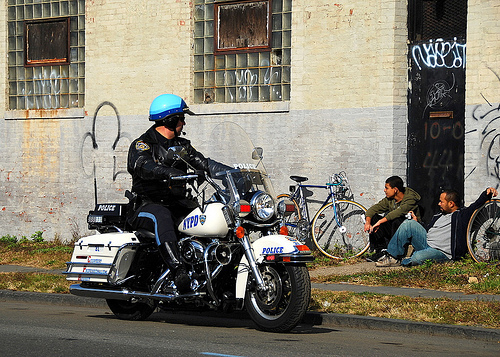
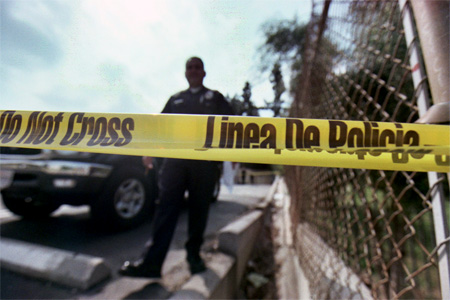 Photo by discarted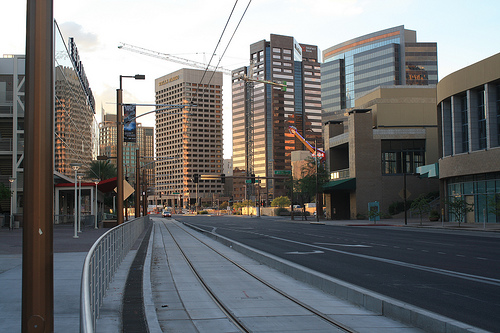


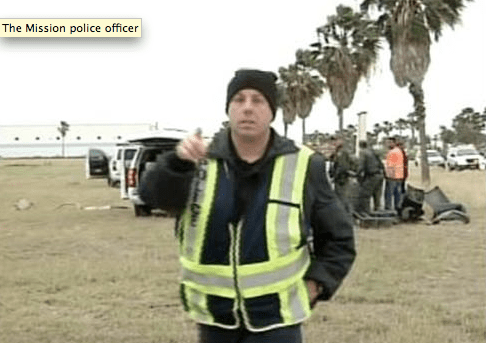 Image from Action 4 News
 Photo by
  Photo by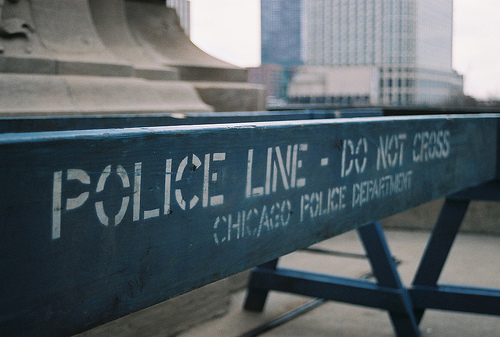
 boywithgrenade.org

