Archive for the 'Photographers’ Rights' Category


LA Pays $1.7m to Fox Camera Operator

Fox TV camera operator Patricia Ballaz has been awarded $1.7 million in damages stemming from the May Day 2007 Immigration Rights rally in Los Angeles where she was beaten by the LAPD.

In her testimony, Ballaz described seeing the LAPD unexpectedly attack reporters in attendance at the rally in MacArthur Park: “He was just an average man doing nothing. I had no idea why this was happening. It was like a war zone.” She was struck repeatedly by an officer with a baton and reported sustaining severe physical and emotional injuries. She has not returned to her job since the May 1, 2007 rally and her lawyer said she will not work in the industry again.

Deputy City Attorney Jessica B. Brown argued that Ballaz and other reporters ignored police instructions to get out of the way. “They are not kings; nobody gives them special rights,” she said.

The jury also awarded KPCC reporter Patricia Nazario $39,000 but were unable to reach a verdict on Ballaz’s fellow Fox colleague, reporter Christina Gonzales.

The city has already agreed to pay almost $13 million in lawsuits connected to that event, which makes it a very expensive, very bad day for the LAPD.

Article from MyFoxLA.com

DHS, Police & BP Detain Photographer at Refinery

Refineries are typically dicey places for photography — even from public vantage points — because oil companies evidently are above the law and the government typically backs them up on that. Add BP and the biggest oil spill in US history to the mix, and well, you can imagine what ensues.

On Friday, Lance Rosenfield, a photographer working on a piece jointly produced by PBS Frontline and ProPublica, was harassed and detained by a Homeland Security officer, two police officers and a security guard at a BP refinery in Texas City, TX. After Rosenfield took a photo of a Texas City road sign, he was followed and surrounded at a gas station where the trio told him they had a right to look at his photos — even if they were shot on public property — and if he didn’t comply he would be taken in. After giving them his vital stats (which are no doubt now filed away on some terrorist watchlist), Rosenfield was released and no charges were filed.

From ProPublica‘s editor in chief: 

We certainly appreciate the need to secure the nation’s refineries. But we’re deeply troubled by BP’s conduct here, especially when they knew we were working on deadline on critical stories about this very facility. And we see no reason why, if law enforcement needed to review the unpublished photographs, that should have included sharing them with a representative of a private company. 

BP maintains it followed “industry practice that is required by federal law.” I would like to see this federal law challenged in court because I have a feeling taking photos of  a public street is a constitutionally protected activity.
See all of Rosenfield’s Texas City photos here.
Article from ProPublica and The Intel Hub

Happy July 4th


Photo: The Library of Congress

The United States is the only country with a known birthday. – James G. Blaine

Earning Her Wings

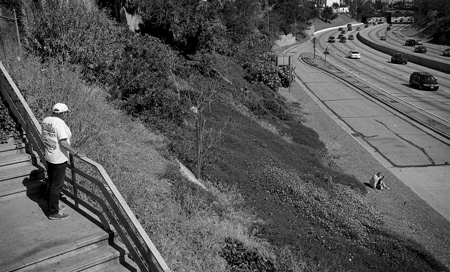
Tracy (high and inebriated): Mistah, you shouldn’t be down there. The cops are gonna come.

No response.

Tracy: Hey pal, get outta there…you’re gonna get killed!

Man (infuriated): WHY DO YOU THINK I’M DOWN HERE!!!

Tracy: Sir, you shouldn’t try to kill yourself.

Man (high on meth): I know.

Photos by Shawn Nee/discarted

Man Arrested for Cop Photo, Sues Dept.

Francisco Olvera says a Sealy (TX) police sergeant entered his home unlawfully after responding to a noise complaint. When he took a photo of the officer, he was arrested for public intoxication and loud music. Now he’s suing for “unlawful search and seizure, unlawful arrest and imprisonment, malicious prosecution” — and he had to deal with “racist jokes” on top of it.

The officer told him it was illegal to take a photo of someone without permission. We’ve heard that one before!

Read the whole crazy story on The Sealy News Online.

MTA Workers Harass Photographers, Make Stuff Up


Photo by maisa_nyc

Since when do MTA workers care what anyone does in the subway stations?

This past weekend, a group of transit workers at the 9th Avenue station in Brooklyn harassed photographer Maki Isayama, telling him he wasn’t allowed to take photos because…well, “you’re not allowed.” When Isayama protested, another worker said he would have to confiscate his camera and erase the images.

But it wasn’t an isolated incident! Another photographer encountered a similiar situation last week when he took this photo in the subway and an MTA worker threatened to confiscate his camera.

Wait – I’m confused. Don’t MTA guidelines clearly state that photos are allowed in the subway?

British Police: “We don’t have to have a law”

British police have been told they shouldn’t harass professional or amateur photographers because – get this – it’s not an illegal activity, but those orders sometimes have a hard time reaching the rank and file. Or maybe it just becomes a lot more difficult if certain officers don’t have to follow things like “laws.”

On Saturday, freelance photographer Jules Mattsson, 16, was shooting an Armed Forces Day parade in Romford in London when he was harassed by officers who told him, among other things, that taking photos of children…and military…and police are all illegal.

How could that be? Where are those laws on the books? That’s what Mattsson thought, and when he tried in vain to assert his rights, he was told: “We don’t have to have a law.”

But Mattsson wasn’t your average pushover, so the officers resorted to stuff like telling him he was “in the way” and an “agitator” and a “threat under the terrorism act.”

The confrontation is priceless in its illustration of the hapless and ill-informed police officer who wants to throw his weight around just because he can. You can read a transcript on the Libertarian Party Members’ Blog here.

Article from The Independent and Jules Mattsson

Among Protests, 2 Photographers Arrested at G-20

UPDATE: Time has published “10 Scenes from the Battlefield,” a collection of fairly arresting images from the G-20 protests.

The G-20 Summit was underway this weekend and so were the arrests. More than 600 people were arrested, and the small northwest Toronto courthouse that was processing them was overwhelmed.

On Saturday, two National Post photographers were arrested while covering protests surrounding the summit. Brett Gundlock and Colin O’Connor were charged with obstructing a peace officer and unlawful assembly, held for 24 hours, and have since been released. They describe their crappy conditions in jail here (though, truth be told, it seems standard as jail goes).

While there were reports of violent and destructive rioters, many people reported being picked up for arbitrary or nonexistent offenses. Even two members of the Canadian Civil Liberties Association, a group that was monitoring civil right abuses at the protests, were arrested. As the National Post reported, the Canadian Civil Liberties Association weren’t pleased with how events unfolded:

“It would appear that the presumption of innocence has been suspended during the G20,” the group said, complaining of a “serious violation of basic rights of hundreds of people.”

The above video, the aptly named “The Battle of Toronto,”  was shot by YouTube user yfcandme, who says he was attacked by protestors while filming. Looking at the police presence it’s hard to believe it’s for an economic meeting and not World War III.

Article from National Post

Celebrating a Pedophile


Photo by discarted

Today marks the first anniversary of Michael Jackson’s drug-induced sudden death, and throughout the world thousands (maybe millions) have been celebrating “the world’s greatest entertainer,” according to reality television judge Greg Mathis. For instance, in Gary, Indiana, a large crowd gathered around Jackson’s mother, Katherine Jackson, as she helped unveil an eight-foot granite monument of Jackson moonwalking on the front lawn of his childhood home.

It’s astonishing how many people forget, including the media, that this man was an alleged pedophile. Rather than proclaiming how much Jackson impacted their lives, maybe fans should ask themselves if they would’ve left their child alone with Jackson when he was alive.

Photographers, Police & the Law

Photo by discarted

Al Tompkins of Poynter.org puts out an incredibly useful daily tip sheet of ideas and issues called “Al’s Morning Meeting” that journalists can then localize and adapt for their own communities. In response to the recent Gizmodo article, “Are Cameras the New Guns?“,  he interviewed Robb Harvey and Richard Goehler, two lawyers specializing in media issues, about the tension between law enforcement and photographers. It’s an excellent interview with a lot of salient points about photographers’ rights.

Al Tompkins: Are you seeing any new sensitivity by police to being photographed/videotaped?

Robb Harvey: The police have always been sensitive to accusations of wrongdoing or overreacting. I believe they are reacting to emerging technologies that allow millions of people to record events in real time, so we are likely to see more postings claiming misconduct and more efforts by police to prevent those postings.

The recent prosecutions mentioned in the Gizmodo article involved participants in the police action — persons being arrested or later charged. The video they have taken may be their best defense to the charges. Is the next step that law enforcement can prosecute recordings by bystanders? If that were the case, the widely disseminated video of the assault on Rodney King might never have seen the light of day.

Media organizations must remain vigilant and work to prevent the application of these laws in an unconstitutional way.

Richard Goehler: I would not say that I have seen any “new” sensitivity by law enforcement or firefighters here. In the past, I have heard about instances where police might confiscate or threaten to take a camera or recorder, but I would not call it a major newsgathering problem or interference.

I found the Gizmodo article very interesting. It seems to me that most of the cases highlighted in the article involved circumstances in which the videotaping or recording was of alleged abuse and/or improper conduct by the police. As a result, the police appeared more aggressive and more motivated to take action concerning the videotaping.

Often it appeared that the actions by law enforcement were in direct retaliation for the videotaping that had taken place. It was also interesting that these cases all took place in states or jurisdictions that have “two-party consent” statutes that let police officers make the argument that they had not consented to the videotaping.

Another interesting point about the cases in the article is that none of them involved traditional/mainstream media companies/reporters/videographers in their news gathering efforts. My sense is that law enforcement, even in a “two-party consent” state or jurisdiction, would be very cautious about trying to pursue claims like this against the media because doing so would surely bring a huge amount of attention and publicity with plenty of amicus support from other media organizations and journalism groups like the Reporters Committee for Freedom of the Press and the Society of Professional Journalists.

Read the whole article on Poynter.org


Spam Blocked