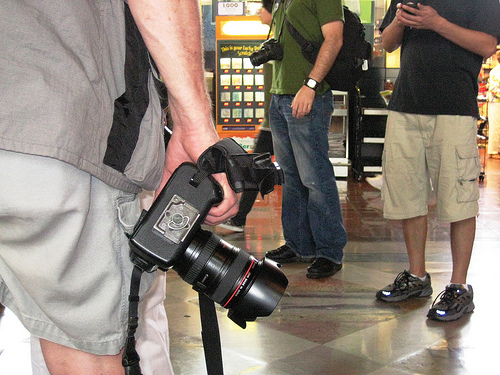
A recent article in The Guardian by security technologist and author Bruce Schneier says that photographers have been coming under increasing scrutiny since 9/11 under the auspices of national security. But, he says:
The 9/11 terrorists didn’t photograph anything. Nor did the London transport bombers, the Madrid subway bombers, or the liquid bombers arrested in 2006. Timothy McVeigh didn’t photograph the Oklahoma City Federal Building. The Unabomber didn’t photograph anything; neither did shoe-bomber Richard Reid. Photographs aren’t being found amongst the papers of Palestinian suicide bombers. The IRA wasn’t known for its photography. Even those manufactured terrorist plots that the US government likes to talk about — the Ft. Dix terrorists, the JFK airport bombers, the Miami 7, the Lackawanna 6 — no photography.
He makes a good point. Outlawing photography makes politicans and law enforcement feel good, like they’re doing something in the fight. Unfortunately they’re going after the wrong people.
And in case there was any doubt, he gives this nice reminder:
Fear aside, there aren’t many legal restrictions on what you can photograph from a public place that’s already in public view. If you’re harassed, it’s almost certainly a law enforcement official, public or private, acting way beyond his authority. There’s nothing in any post-9/11 law that restricts your right to photograph.
Article via The Guardian.
Photo via let ‘er rip.


Why have you stolen that picture? It’s not yours to take.
Please remove it from your site and if you like use the one from the Guardian site (with a link).
If you’re serious about photography and rights, the least you could do is to credit the source of the photo. We have the rights – I very much doubt you do.
Charles Arthur, editor, Technology Guardian
Stolen from The Guardian? That’s interesting because that is a movie still from the actual film, which is available all over the net. More importantly, why did The Guardian not credit Robert Burks, the DP of Rear Window, for the photo? He’s responsible for the image, not a Guardian staff memeber. You probably should have scrolled a little further and finished reading before leaving this comment. That way you would have seen the link to The Guardian.
So is Google a photo creation site now? Are the stills from the film available for anyone to take and copy?
You’re a photographer – remember how you’ve treated the photographer who created that pic above next time you’re complaining about not being paid on time, or someone uses your work without permission or sells it as their own. What goes around, comes around.
Just because something is on Google, doesn’t mean you have the right to use it. The Guardian will have negotiated use with the studio or with an image library and will have obtained the picture through legitimate means. Google image search? Not legitimate means. The picture also is unlikely to be the intellectual property of the DP as he was employed by the studio. The studio owns his IP and thus owns the pic.
Ah, you’ve changed the picture. Good thing. You could acknowledge the fact, of course..
Wonderful website. A lot of helpful information here. I’m sending it to some buddies ans
additionally sharing in delicious. And of course, thank you to
your sweat!
I read this piece of writing completely about the difference of newest and earlier technologies,
it’s amazing article.
Pretty! This has been an incredibly wonderful
article. Thanks for providing these details.