Archive Page 81

Photographer Sues Homeland Security Dept.

Software developer, amateur photographer and self-proclaimed libertarian activist Antonio Musemeci and the NYCLU are suing the Department of Homeland Security for what they say was an unlawful arrest during a protest at the Manhattan federal courthouse last year. The lawsuit challenges a “government regulation that unconstitutionally restricts photography on federal property, including public plazas and sidewalks.”

Musumeci was videotaping the arrest of protestor Julian Heicklen in November 2009, when officers approached and asked what he was doing. Because he said he was freelancing (which he does for Free Talk Live – for free), he was arrested under a code which prohibits news or commercial photography on federal property. The situation was classic — very similar to the dozens of ones we’ve reported on here. The agents took his camera and poked around on it, talked down to him, threw their weight around. Ultimately only Musumeci’s memory card was confiscated after he suggested that would be the only relevant information for the agents. While charges against him were eventually dropped, Musumeci never got his memory card back.

From the NYCLU:

“We understand the need for heightened security around federal buildings, but the government cannot arrest people for taking pictures in a public plaza.”

It will be really interesting to see how this turns out, as it could be a watershed event for photographers’ rights.

You can read all of the events leading up to the arrest here.

Article from New York Daily News and blog of bile
Reporter Arrested at Karl Rove Speech

Reporter Aaron Dykes, who works for the site Infowars.com, was arrested April 19 at the University of Texas at Austin for questioning Karl Rove during a speech on, among other topics, protection of individual liberties. When Dykes got up and yelled out that Rove wasn’t supporting free speech by allowing anyone to ask questions, Rove shot back, “Shut up and sit down!” Dykes was promptly escorted out of the auditorium and charged with “disrupting a meeting or procession.” He has since been released.

Dykes talks about it on Alex Jones’ radio show here.

Maryland’s Personal Freedoms In Trouble

Despite having many good qualities, like kick-ass crabs and Cal Ripkin, Maryland is ranked as the worst state in the country for personal freedoms (which is disappointing on a personal note since it’s my home state).

Two recent cases have brought to light some troubling instances of abuse of power. In one, Anthony Graber has been charged with a felony for recording a traffic incident where he was stopped for speeding and hot-dogging on his motorcycle. In the video (above), the plainclothes Maryland State Trooper exits his unmarked vehicle and draws his gun on Graber. Assumedly State Attorney of Harford County Joseph Cassilly didn’t like the public embarrassment, so he cooked up some charges that Graber was in violation of a wiretap law. Take away Graber’s reckless behavior, and…wow.

The second incident involves footage of three Prince George’s County police beating University of Maryland student John McKenna during a celebration after the Terrapins basketball win in March. When attorneys for McKenna (and his friend Benjamin Donat, who was also involved) subpoenaed footage from campus cameras and reviewed it, a crucial 90 minutes was missing. Minutes, mind you, that another student’s recording showed the students in question did not assault the officers or their horses.

And here’s the kicker, from the Washington Post:

The university police lieutenant in charge of copying the videos, Joanne Ardovini, is married to John Ardovini, one of the officers on horseback said to have been assaulted by McKenna and Donat.

Articles from ABC 2, Cato@LibertyWashington Post and ABC 7 News (& thanks to Dave)

Earth Day’s 40th Anniversary Today


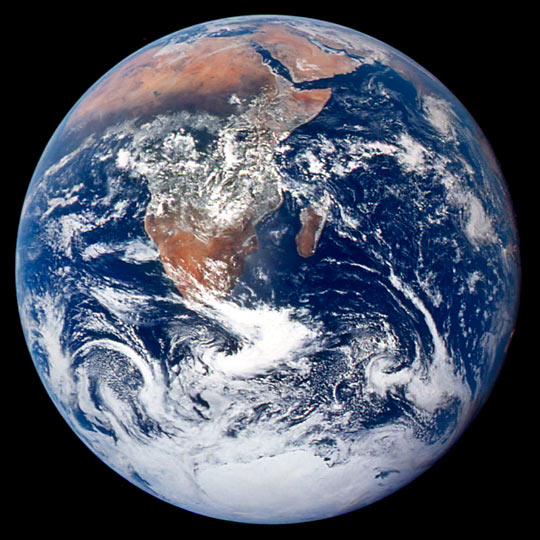
Image courtesy NASA Johnson Space Center

In celebration of Earth Day we bring you this awesome photo of the fifth largest planet taken December 7, 1972. This view is as seen by the Apollo 17 crew traveling toward the moon and the photo extends extends from the Mediterranean Sea area to the Antarctica south polar ice cap.  Almost the entire coastline of Africa is clearly visible. The Arabian Peninsula can be seen at the northeastern edge of Africa. The large island off the coast of Africa is the Malagasy Republic. The Asian mainland is on the horizon toward the northeast.

You can see more photos of the ever-deteriorating Earth (kidding!) on NASA’s Visible Earth site.

Nazis Rally for Racism in LA

Photo by discarted

This past Saturday’s Nazi rally and counter protest in downtown Los Angeles got a lot of press, and our own discarted was there to document the scene. 

See more photos at LAist.com

US Park Police Admits ‘Rookie’ Error

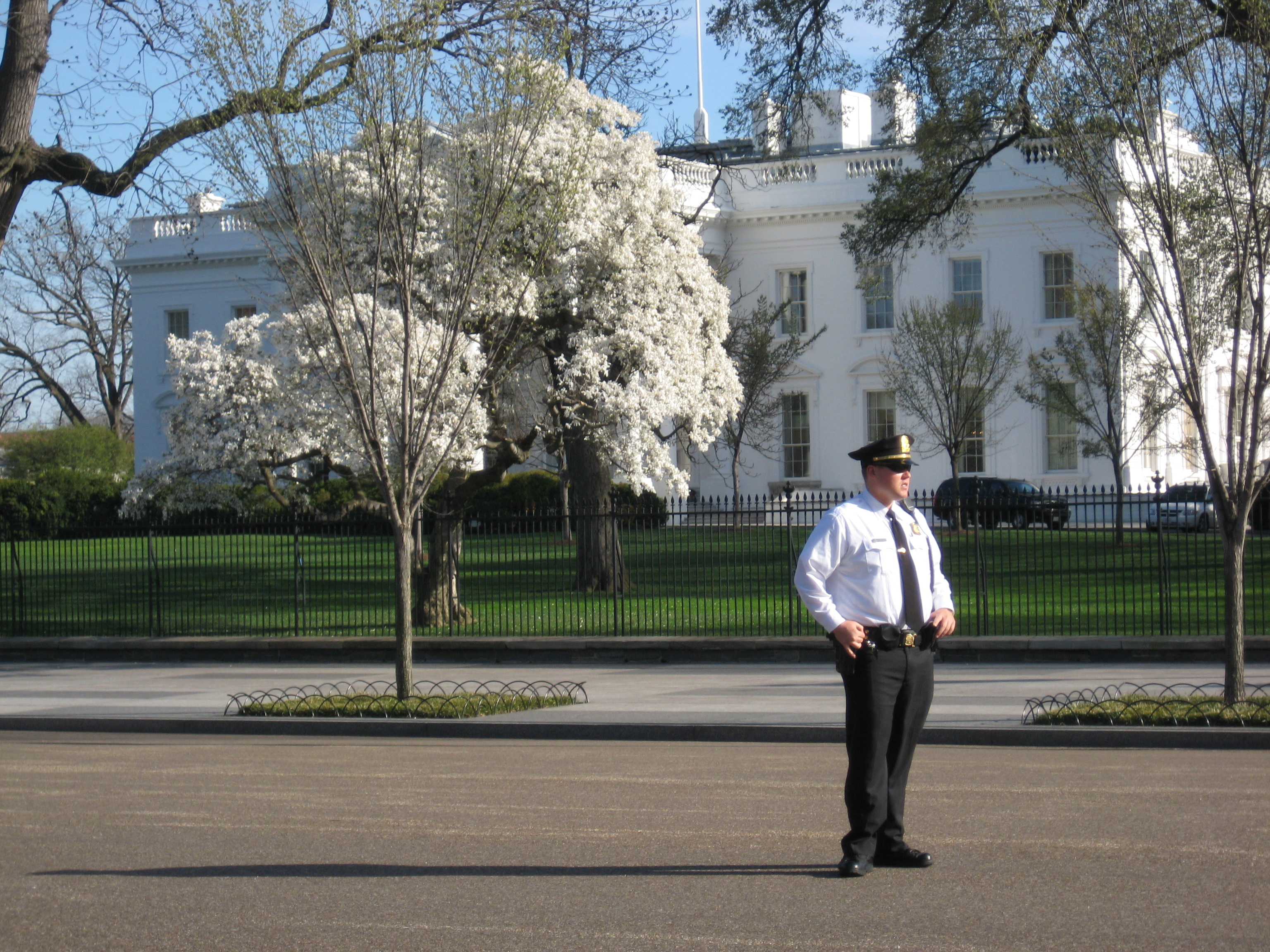
The US Park Police stationed outside the White House are in hot water after they blocked reporters (see YouTube video) and closed Lafayette Park amidst a “Don’t Ask, Don’t Tell” gay rights protest on Tuesday.

A Park Police spokesman put the blame squarely on his department, not the White House or Administration, and told Politico it was  a “rookie, amateur error” and “embarrassing.”

I can tell you from personal experience that the police outside the White House seem to commonly make rookie errors, as I was walking by there a few weeks ago and hundreds of tourists and pedestrians were moved back from the White House gates for over 30 minutes, supposedly due to the presidential dog being let outside (and he was not in any way visible from the street). Just imagine — these whole classes of kids traveled from the heartland to see the most famous house in America, and they’re forced instead to just look at some policeman (above). 

If that was indeed the reason to disrupt almost the entire block of Pennsylvania Avenue, I would say there is some ridiculous overreaction going on there.

Article from Politico

LAPD Patrol Cars Getting Dash Cams

It’s only taken two decades, but the LAPD is ready to install dashboard cameras in all squad cars. Officers in the Southeast Division will start using them beginning this Sunday.

From the LA Times article:

The cameras, which will capture video and audio of such encounters, are viewed as a vital tool for fulfilling a court order to guard against such racial profiling, as well as for protecting cops against bogus claims of abuse made by people during stops.

And, to be fair, protect citizens against bogus claims from cops.

Article from LA Times

Police Raid Campus Newspaper, Seize Photos


Photo by Harrisonburg Police Dept./AP

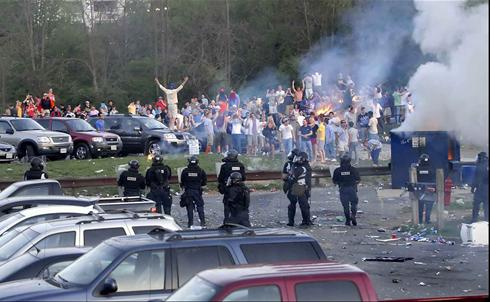
James Madison University’s student newspaper got quite the surprise Friday — and it wasn’t a tip on a meatloaf protest in the cafeteria. The Commonwealth’s Attorney Marsha Garst and six police officers raided The Breeze‘s offices with a search warrant to seize photos of an April 10 school melee.

The melee, which started as an off-campus party, got out of control and lasted for hours until police in riot gear broke it up, spraying tear gas and arresting 30 people in all. Breeze Editor in Chief Kate Thisdell said she thinks The Breeze was the only media outlet to have gotten photos of the incident, and when Garst asked for them last week, she declined.

Thisdell gave up the photos Friday only when Garst threatened to confiscate all the paper’s equipment. Garst justified her actions by saying the raid was to help them get “violent criminals off the streets.” But, as much as we agree that 20-year-olds throwing bottles of Miller Lite are a danger to society at large, what Garst did was illegal — and you know they wouldn’t be trying that with The Roanoke Times. Not a chance. But of course it’s much easier to bully a student newspaper.

As The Roanoke Times reports:

Frank LoMonte, executive director of the [Student Press Law Center in Arlington, VA], said in a statement that the search was likely a violation of the Privacy Protection Act, a “federal anti-newsroom search law” that generally makes it illegal for government officials to search news organizations without a subpoena.

The Breeze has gotten a lawyer and the photos have been temporarily sealed while they negotiate an agreement.

Article from The Roanoke Times and The Breeze

Inspired By Cartier-Bresson

JPG Magazine is hosting a contest in partnership with the Henri Cartier-Bresson exhibit at MoMA. Submit a photo that was inspired by the photographer and explain why, and you could win a trip to NYC to see the exhibit in person.

For more info, and to see the entries so far, go to JPG Magazine here.

Street Photography Under Siege?


Photo by discarted

The Guardian thinks street photography is at a crossroads, and if you’re a fan you too may have been wondering, Where do we go from here?

Writer Sean O’Hagan traces the history of the genre, back to the days of Garry Winogrand, Lee Friedlander and Joel Meyerowitz in the 60s. He also talks about how much things have changed and if the art form can survive in this modern era of extreme paranoia and the ubiquity of cameras.

Today, photography – and street photography in particular – is a contested sphere in which all our collective anxieties converge: terrorism, paedophilia, intrusion, surveillance. We insist on the right to privacy and, simultaneously, snap anything and everyone we see and everything we do – in public and in private – on mobile phones and digital cameras.

And then on top of all that, there’s the discussion that street photography is to a large extent dismissed and not respected on the level of fine art because it’s “too street-level, too authentic in some way,” as London street photographer Stephen McLaren theorized. But isn’t that always the way? The burger isn’t respected as fine dining until someone like Daniel Boulud puts black truffles on it and charges you $150. Then it’s art. So it’s really all about perception, and art is really all about perception.

Street photography will live on, and it’ll be one of the best artifacts of the way a society lived and walked among each other. As street photographer Matt Stuart tells O’Hagan:

People say street photography is somehow old-fashioned and cliched, but, if that’s the case, so is portraiture or sports photography; you might even say so is photography itself. Sure, we’re recording the everyday world in much the same way that street photographers have always done, but times change and things move on, and street photography is a record of that at ground level. That is why it is so important to resist calls for it to be banned or controlled.

Article from The Guardian


Spam Blocked